Personal·2026
VOCAB
A personal web application for recording and learning English vocabulary
- Role
- Full Stack Developer
- Team
- Solo Project
- Year
- 2026
Key figures
- 4 levels
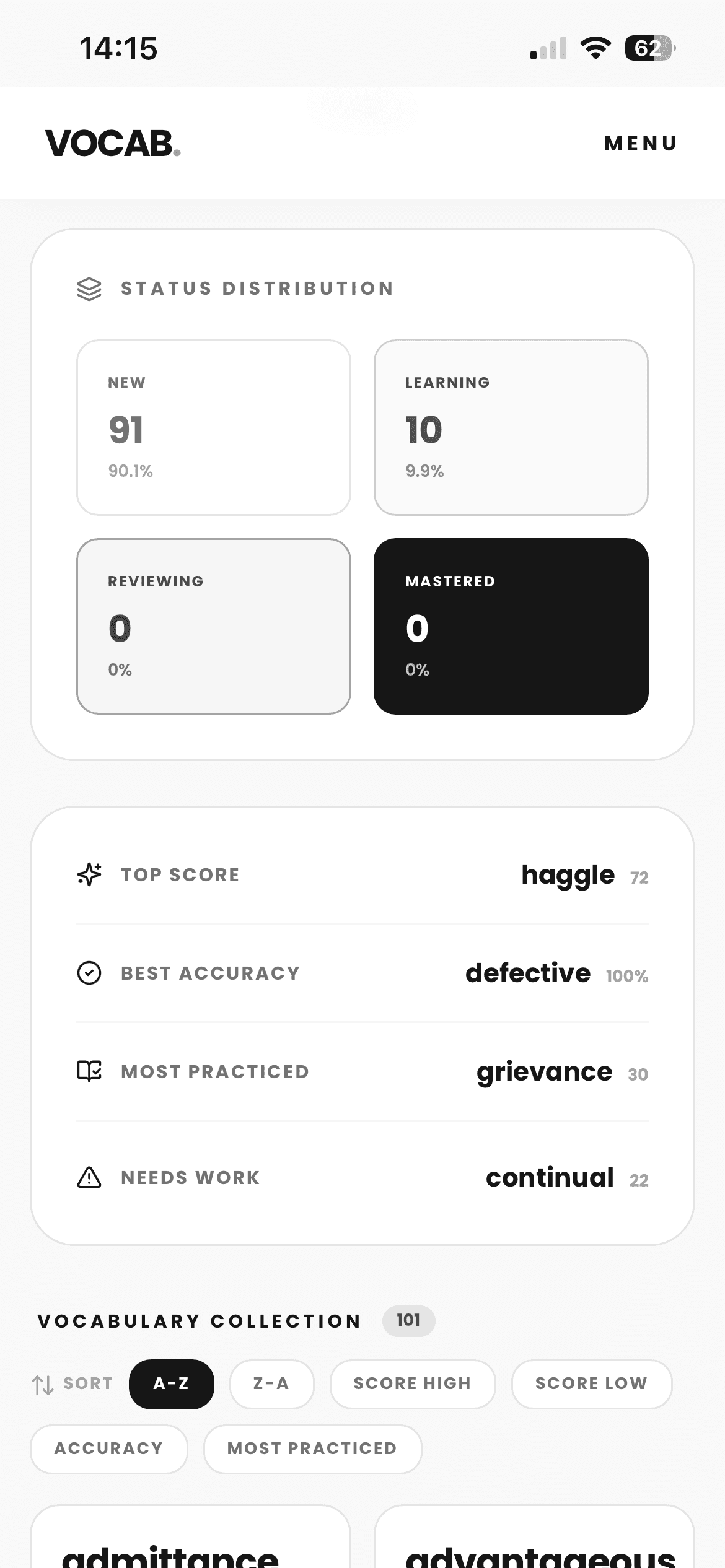
- Learning states per word
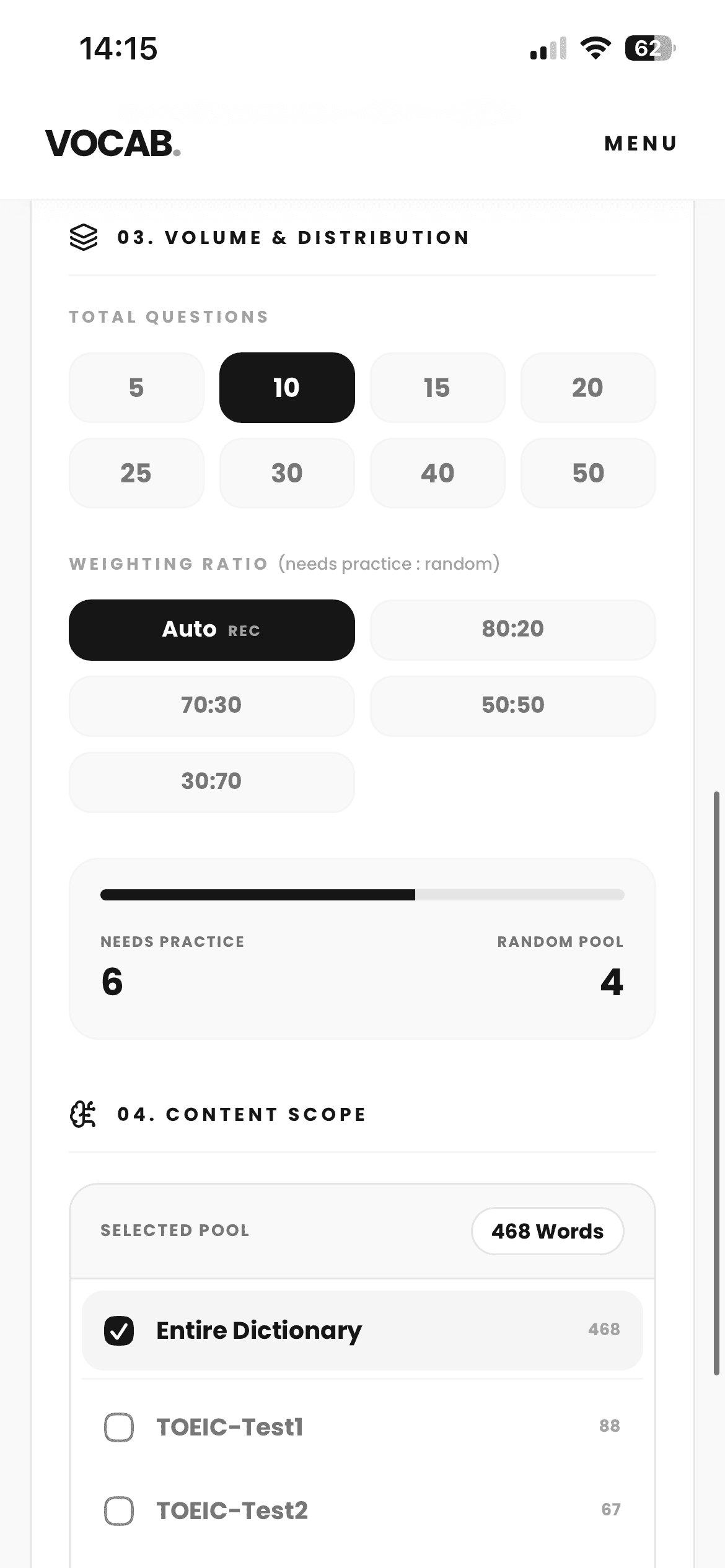
- Weighted to weak words
- Quiz selection
- Normal · Review mistakes
- Quiz modes
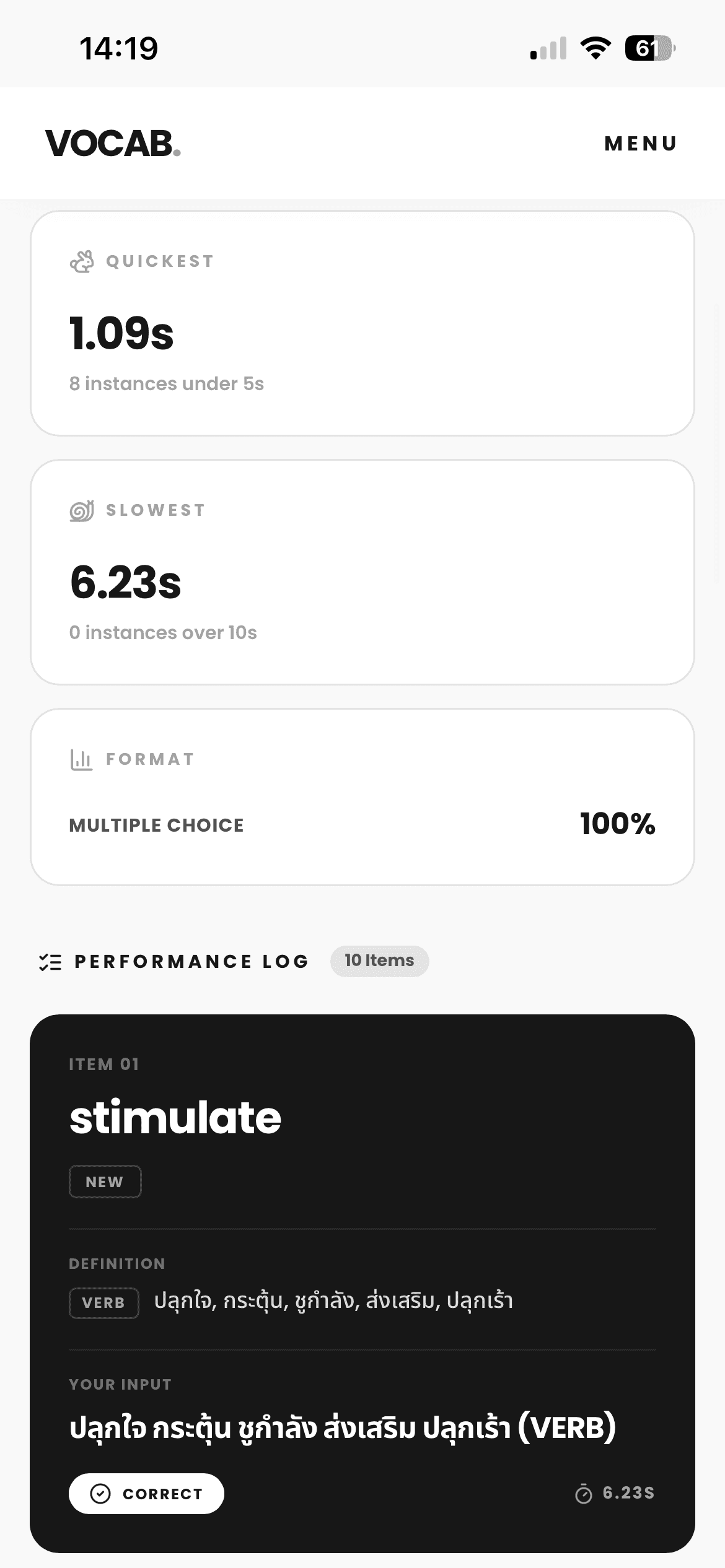
- Many meanings · POS
- One word can hold
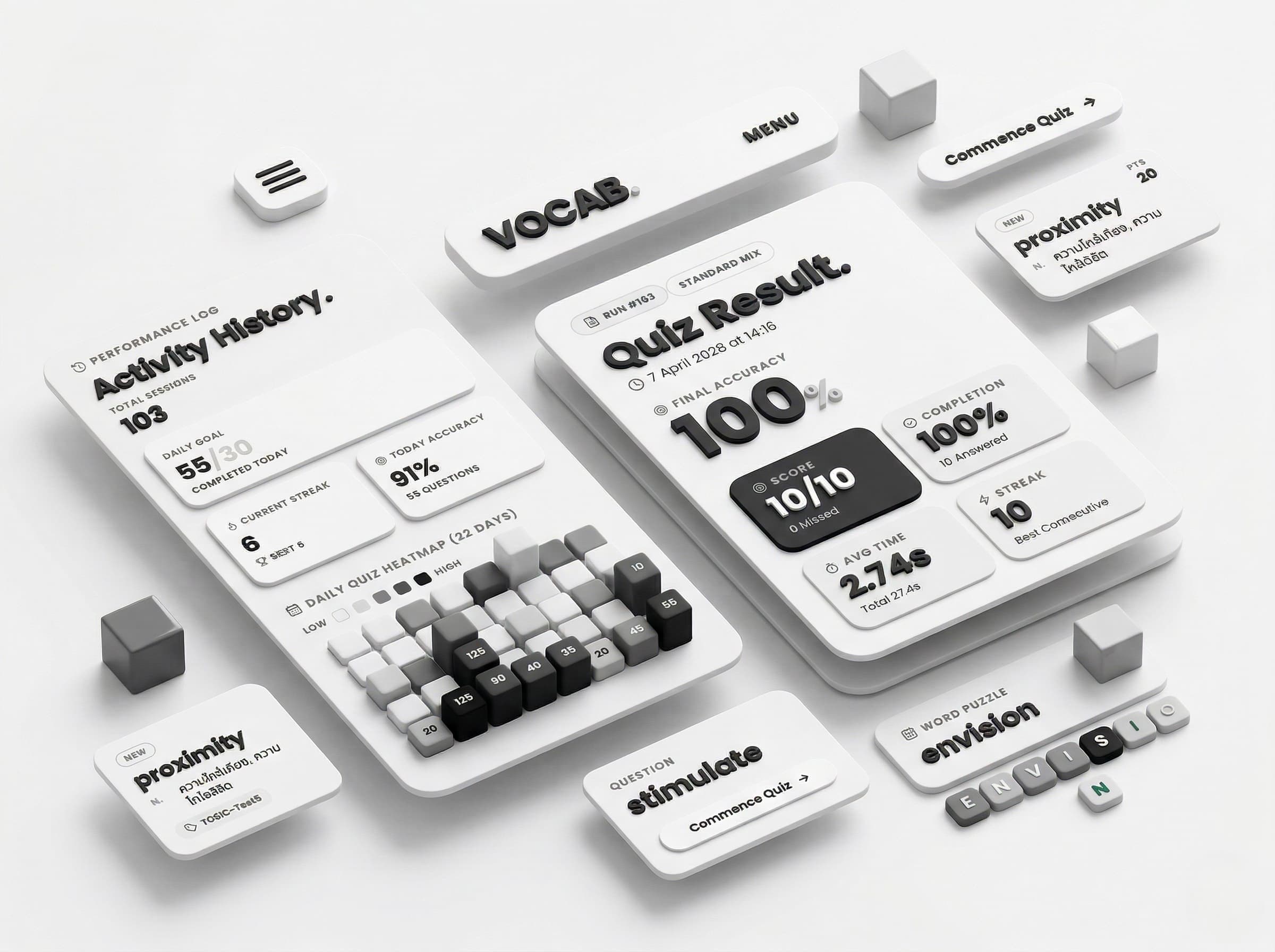
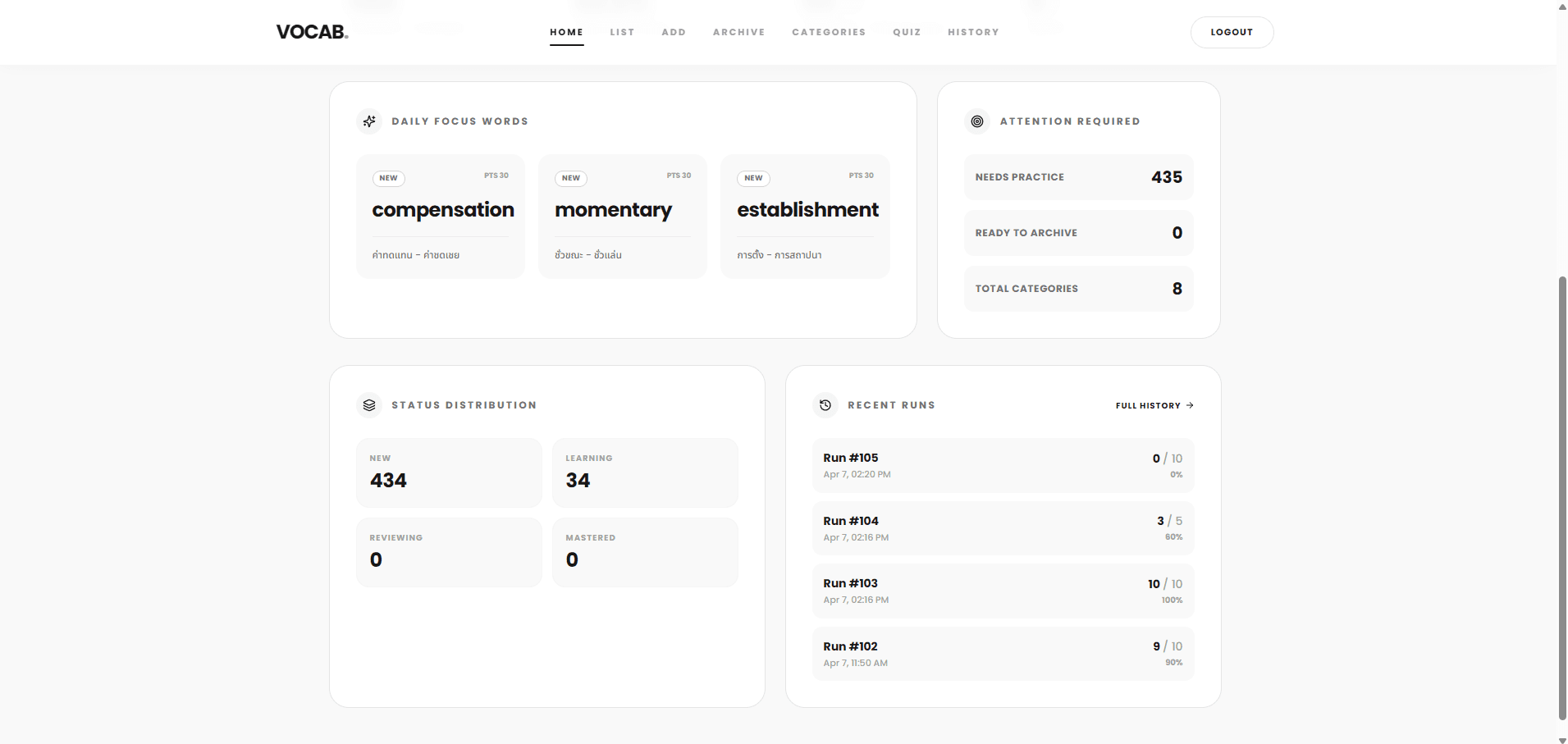
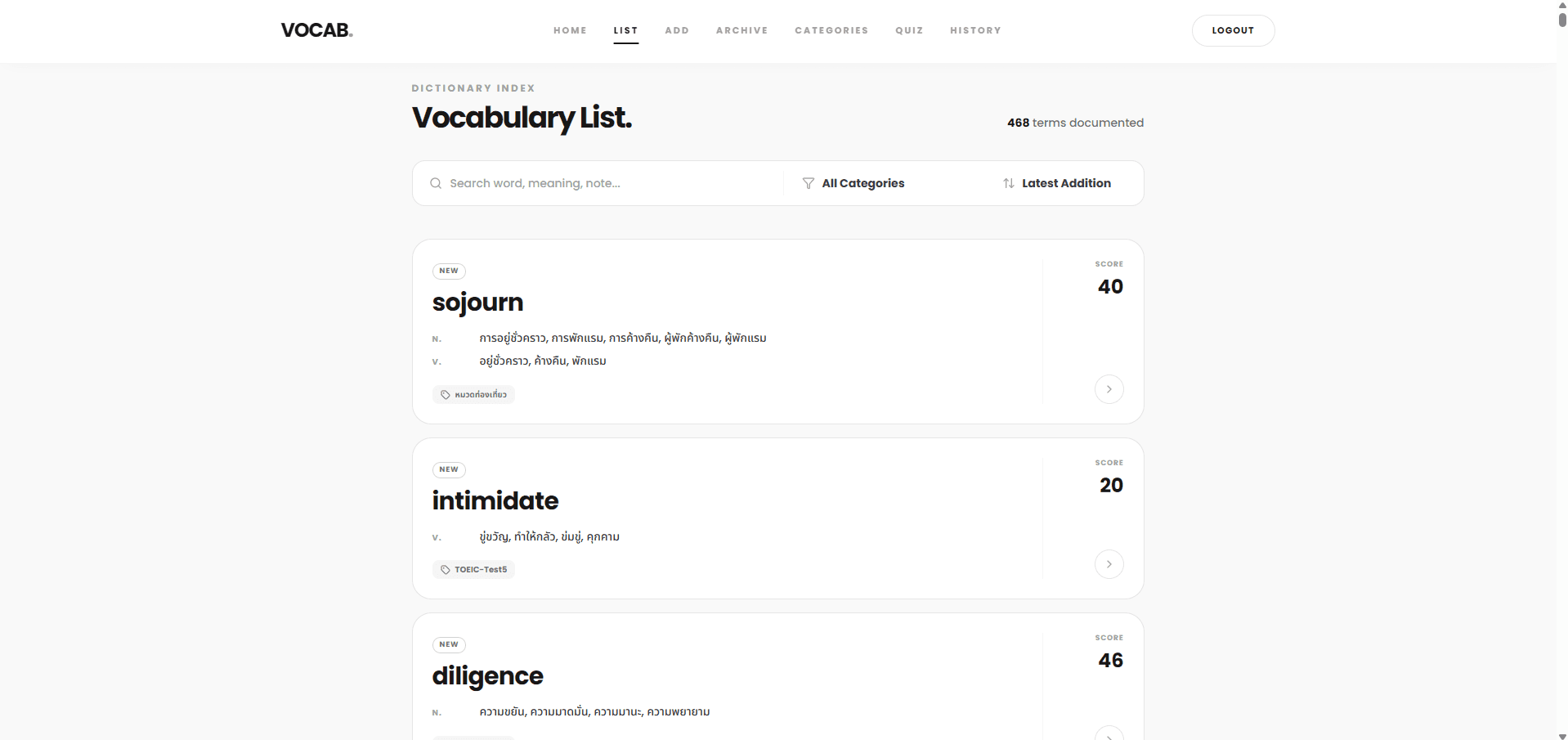
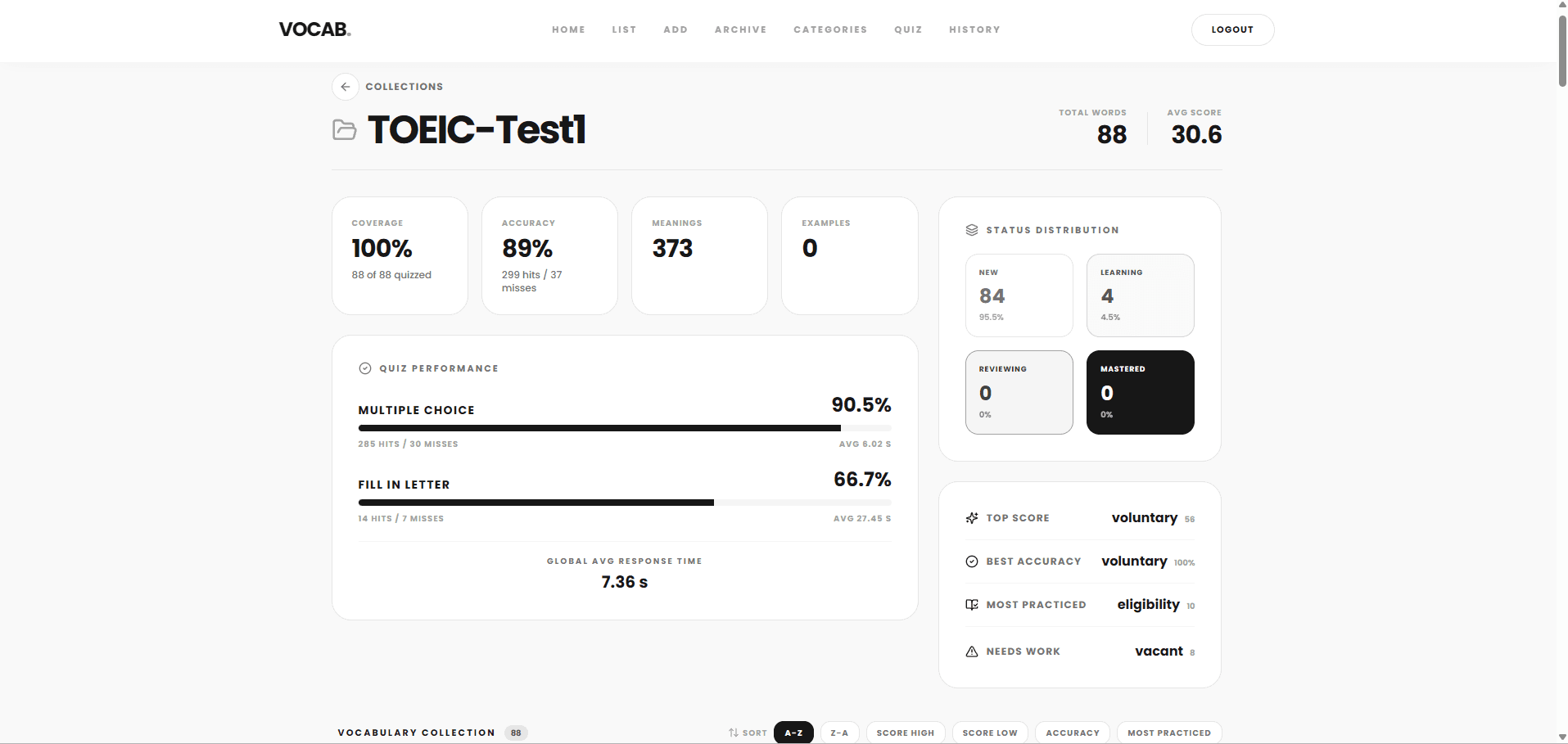
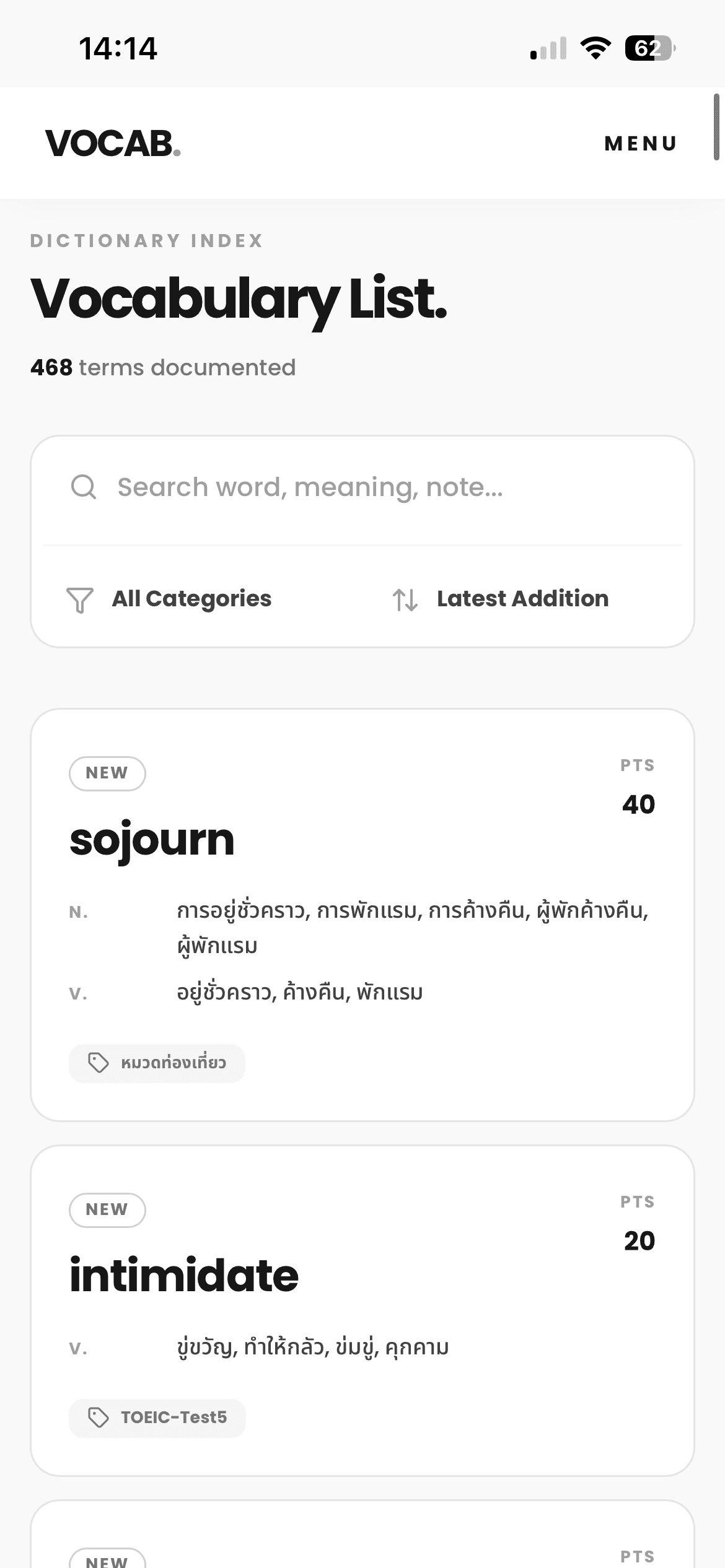
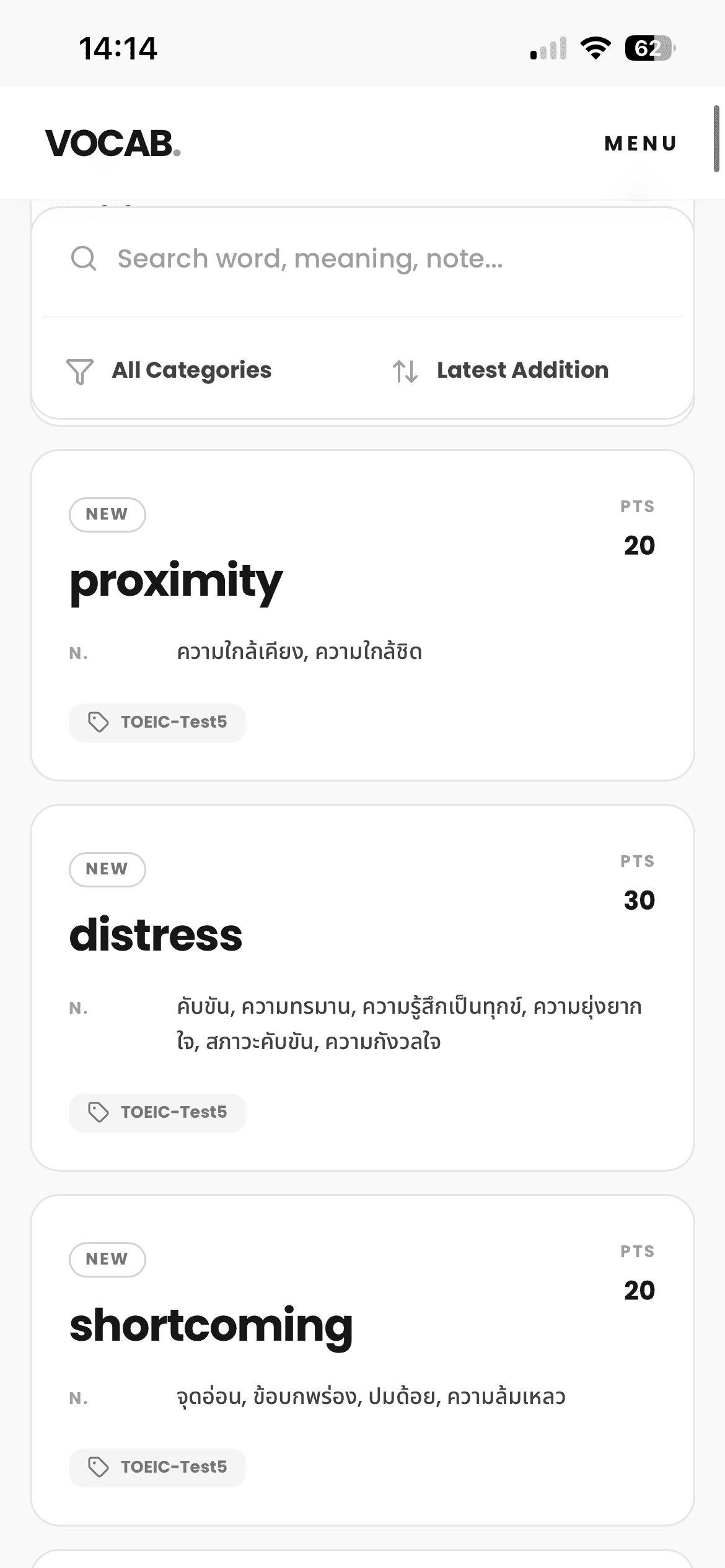
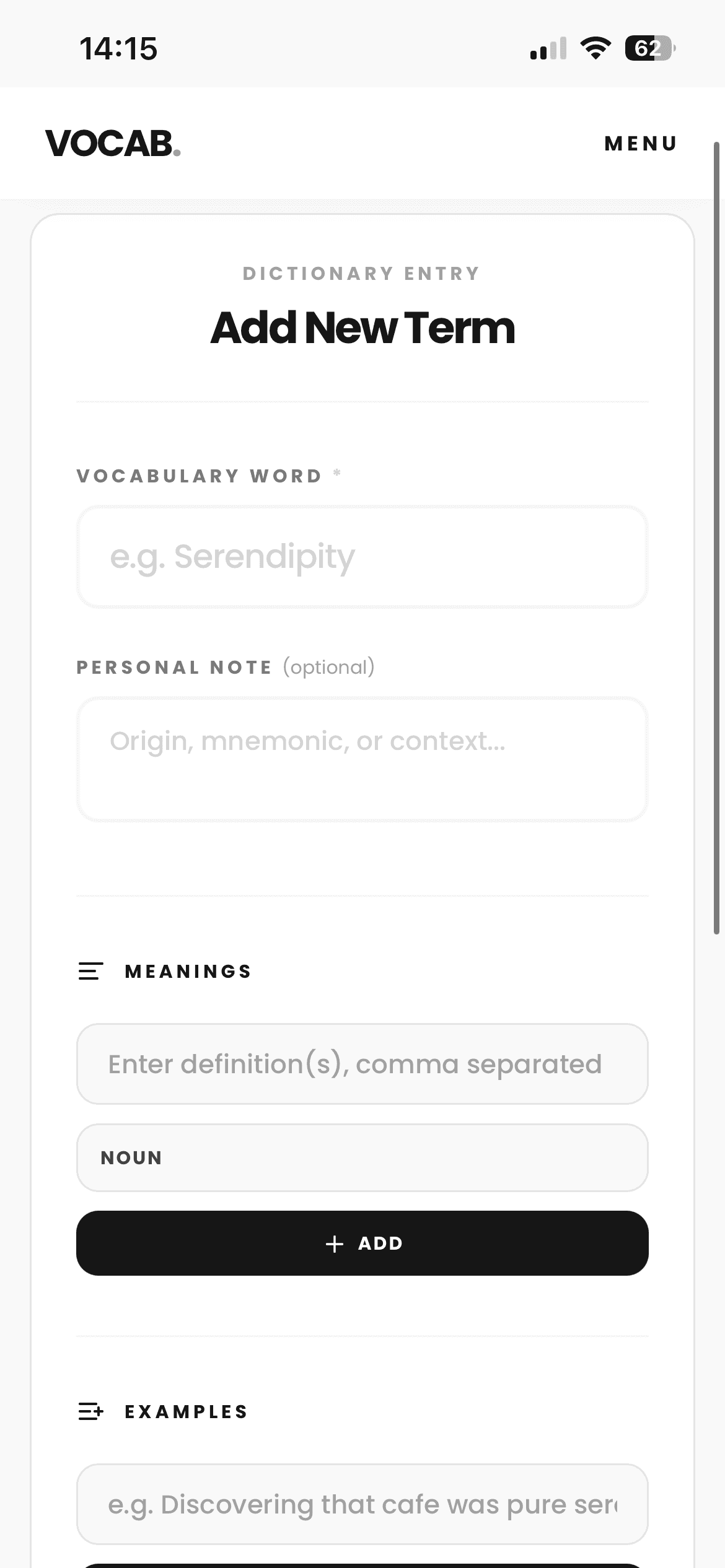
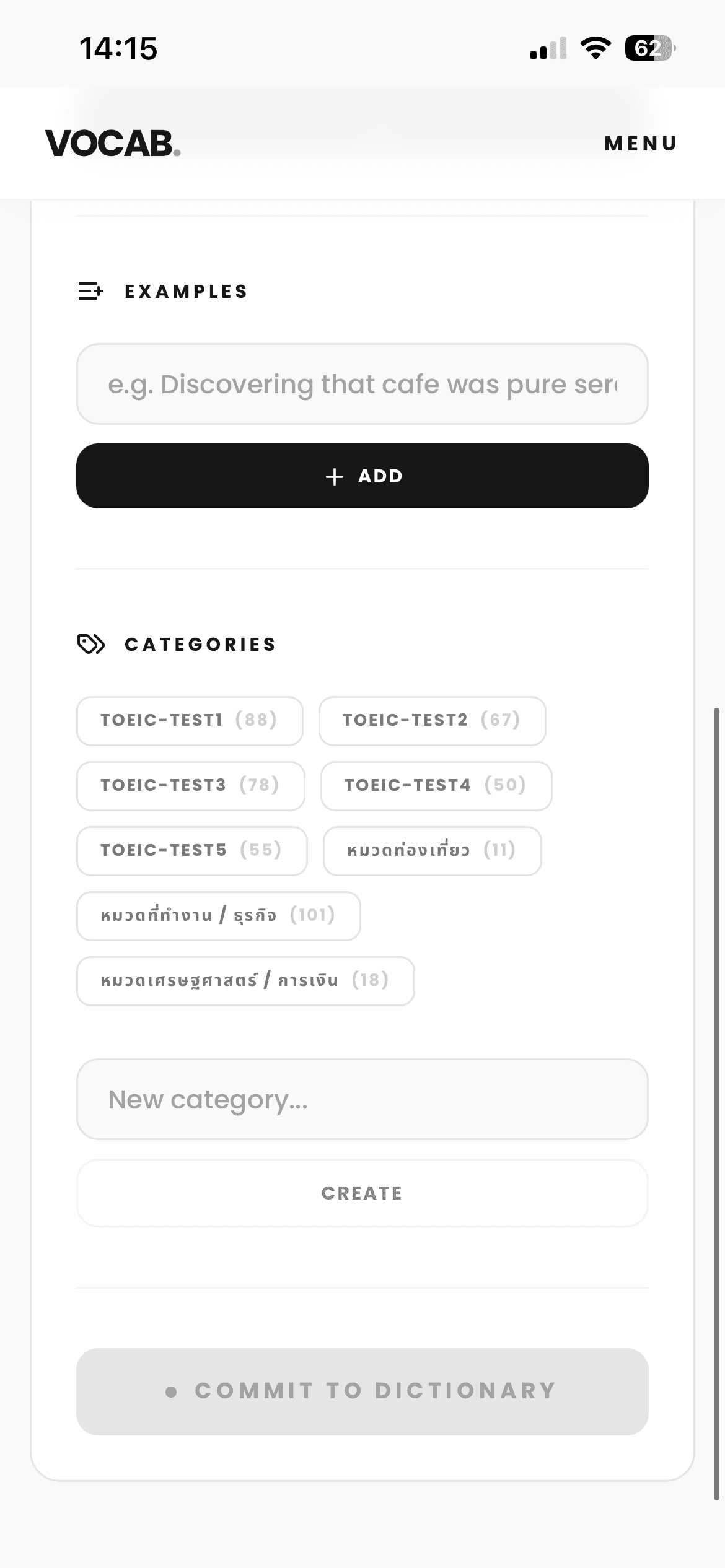
A web application designed to serve as a personal vocabulary repository and memory aid. Its standout feature is a flexible vocabulary recording system, where a single English word can have multiple Thai meanings and parts of speech (POS). It also supports saving example sentences and organizing words into categories. The system tracks each word’s learning progress through statuses such as NEW, LEARNING, REVIEWING, and MASTERED, which are automatically evaluated and updated through a sophisticated quiz system. It supports both normal quiz mode and a review mode for previously incorrect answers, using an algorithm that gives more weight to low-scoring words (frequently answered incorrectly) than to general words. In addition, it includes a Daily Goal system and Activity History to help maintain motivation and provide a continuous record of learning progress.
The problem
- 01Vocabulary notebooks or general-purpose applications often have limitations when it comes to recording a single word with multiple meanings or contexts (multiple parts of speech), as well as storing complete example sentences.
- 02Vocabulary review is often completely random, which wastes time on words that are already mastered and fails to focus enough on words that are often forgotten or difficult to remember.
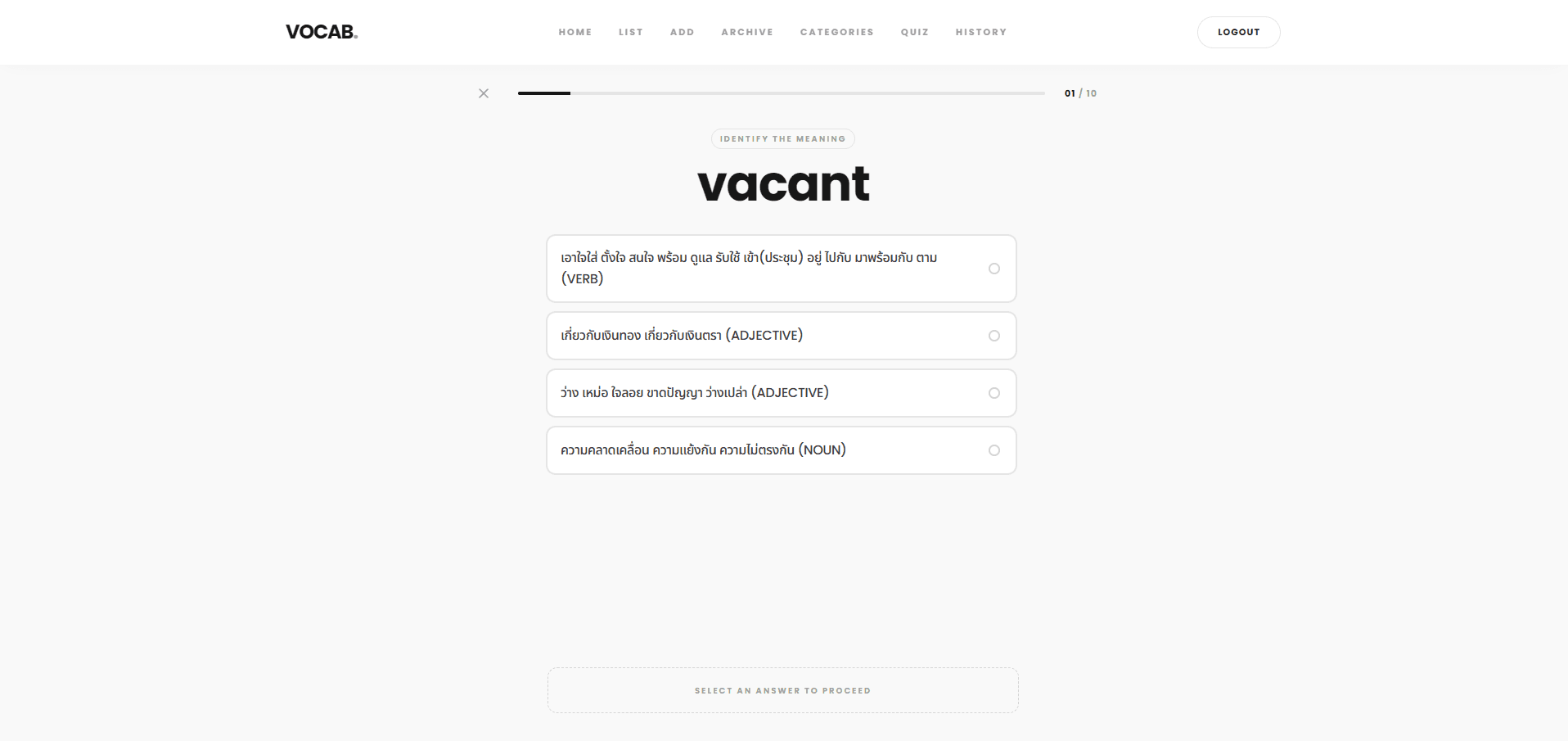
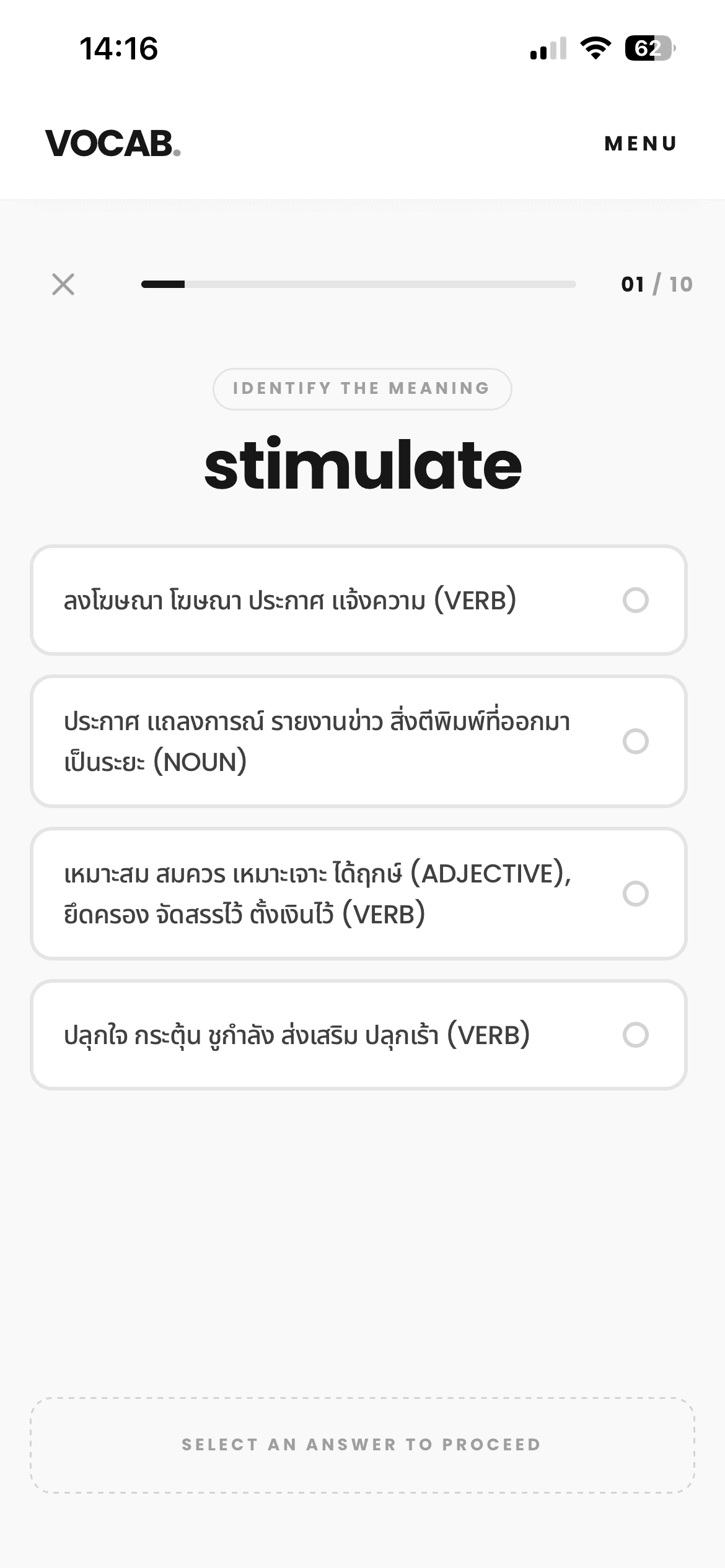
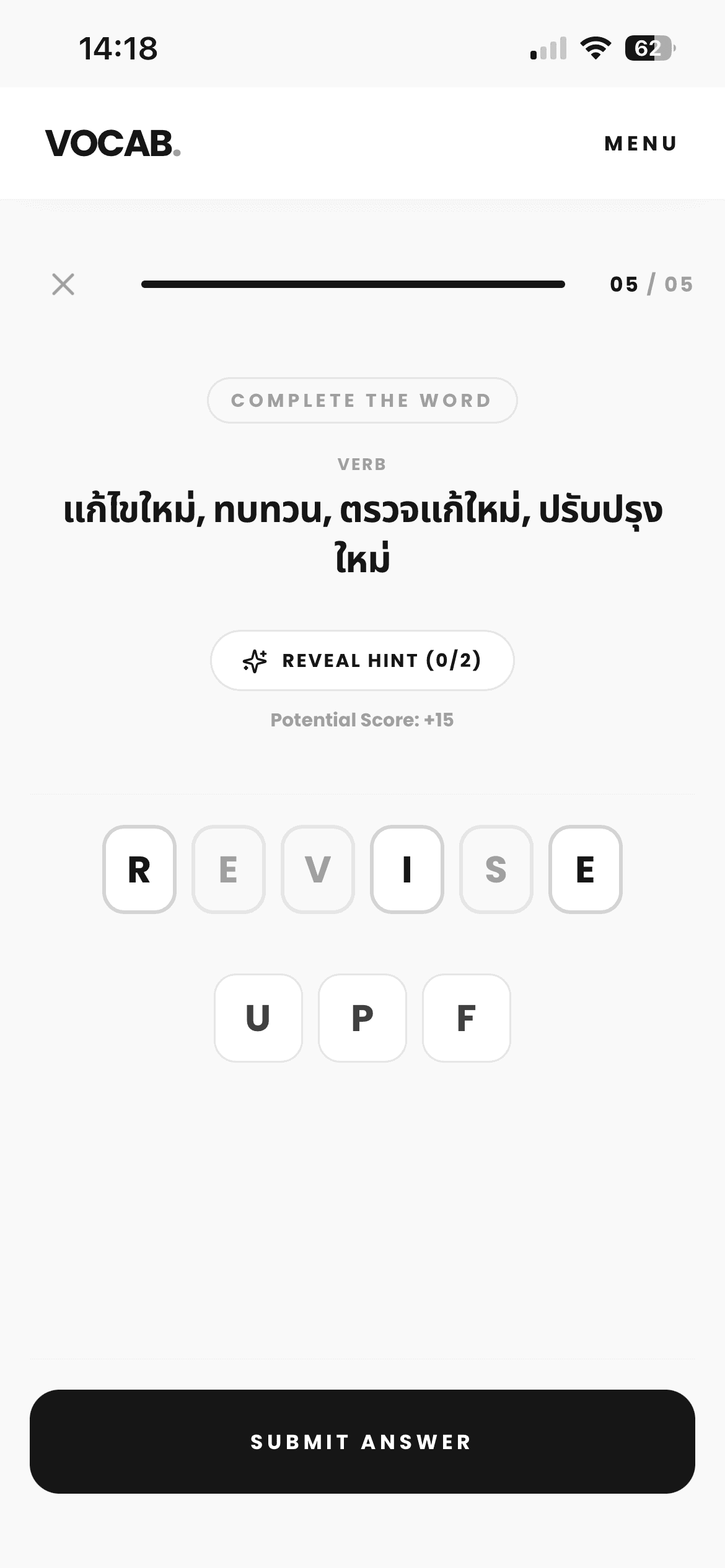
- 03There is a lack of tools that provide multiple memory-testing formats in one place, such as multiple-choice quizzes and fill-in-the-blank exercises.
- 04There is often a lack of motivation to study vocabulary every day, along with no system for reviewing historical statistics to clearly see how much progress has been made.
The approach
- 01Designed the database to support one-to-many relationships for vocabulary entries, meanings, parts of speech, and example sentences, along with a customizable category system.
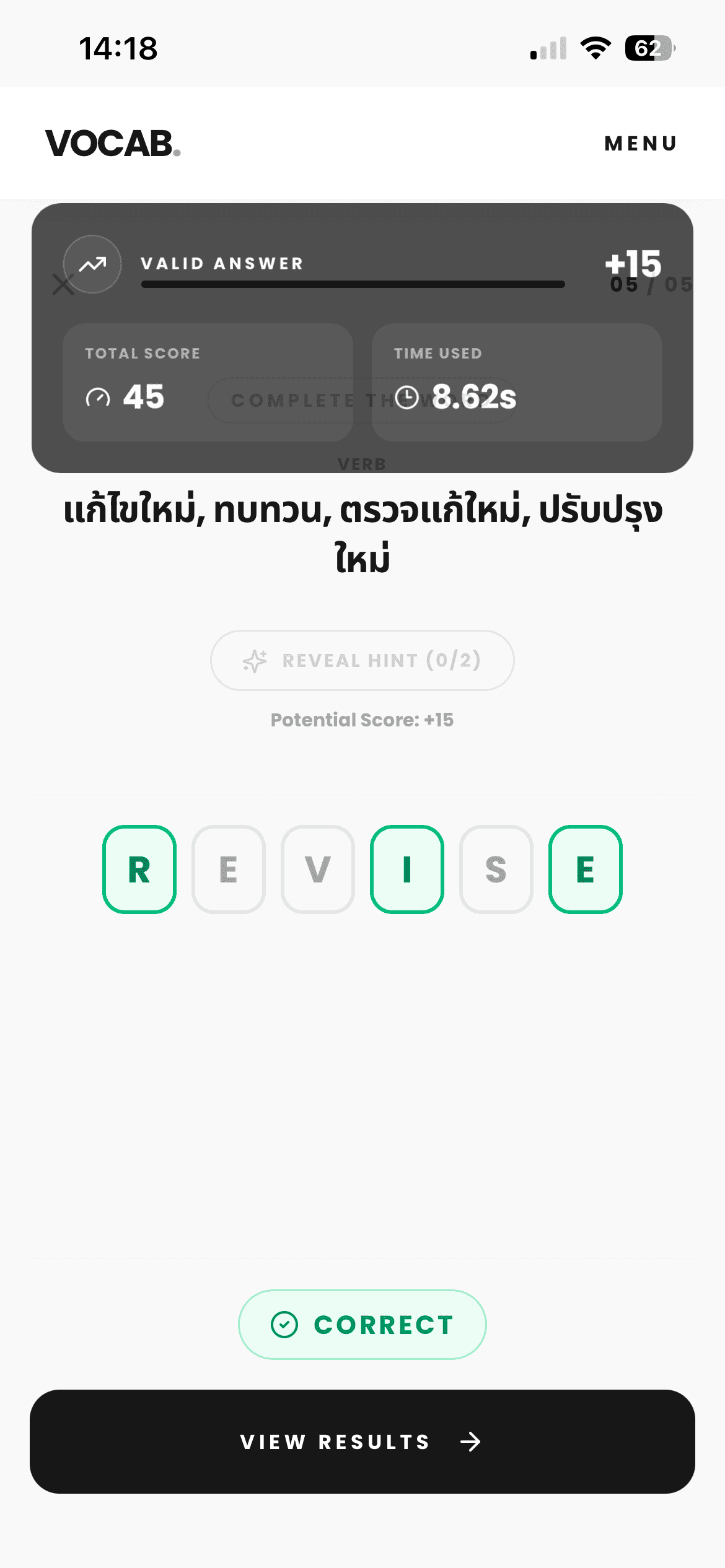
- 02Developed a scoring and word status tracking system in which each quiz attempt automatically recalculates the score and promotes or demotes the status of each word.
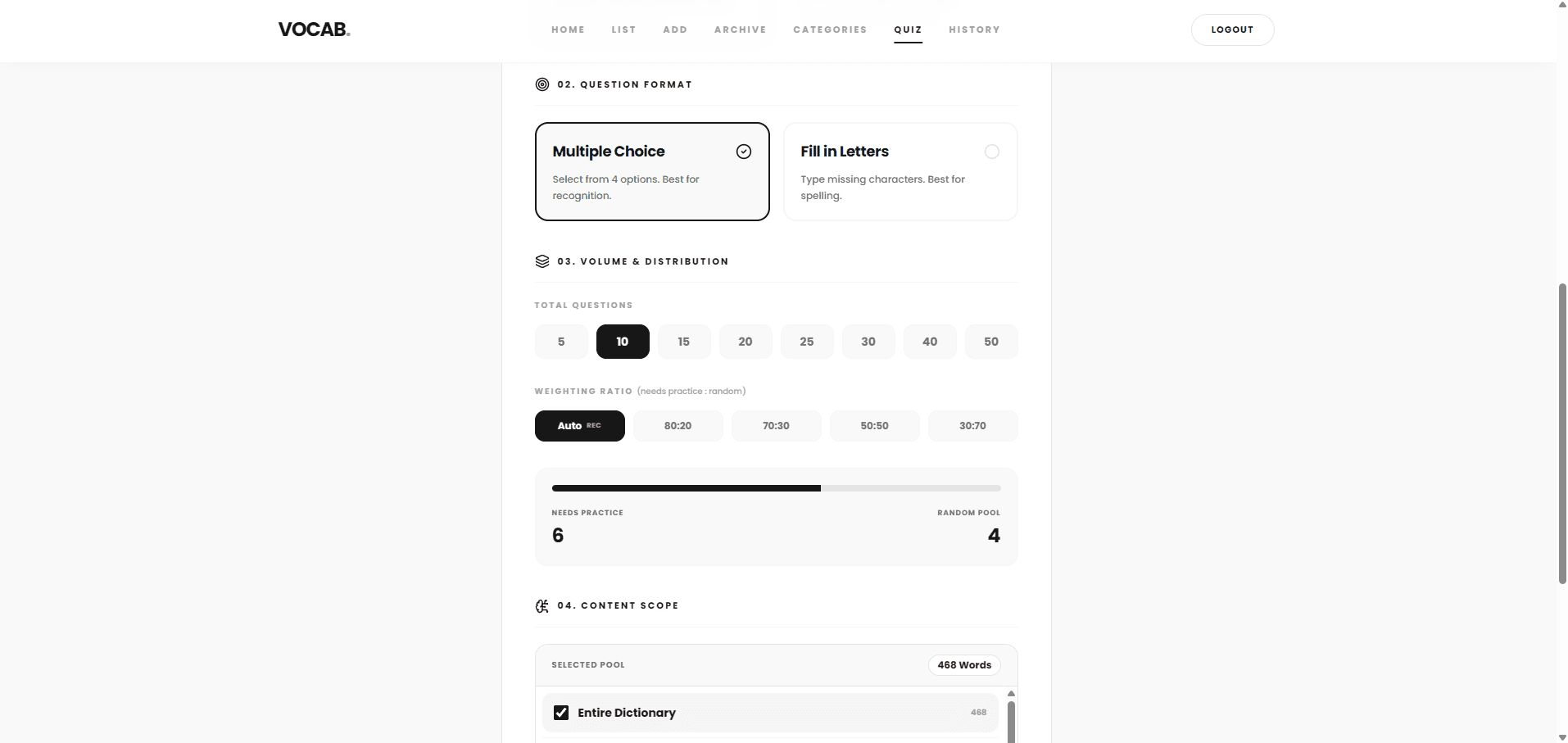
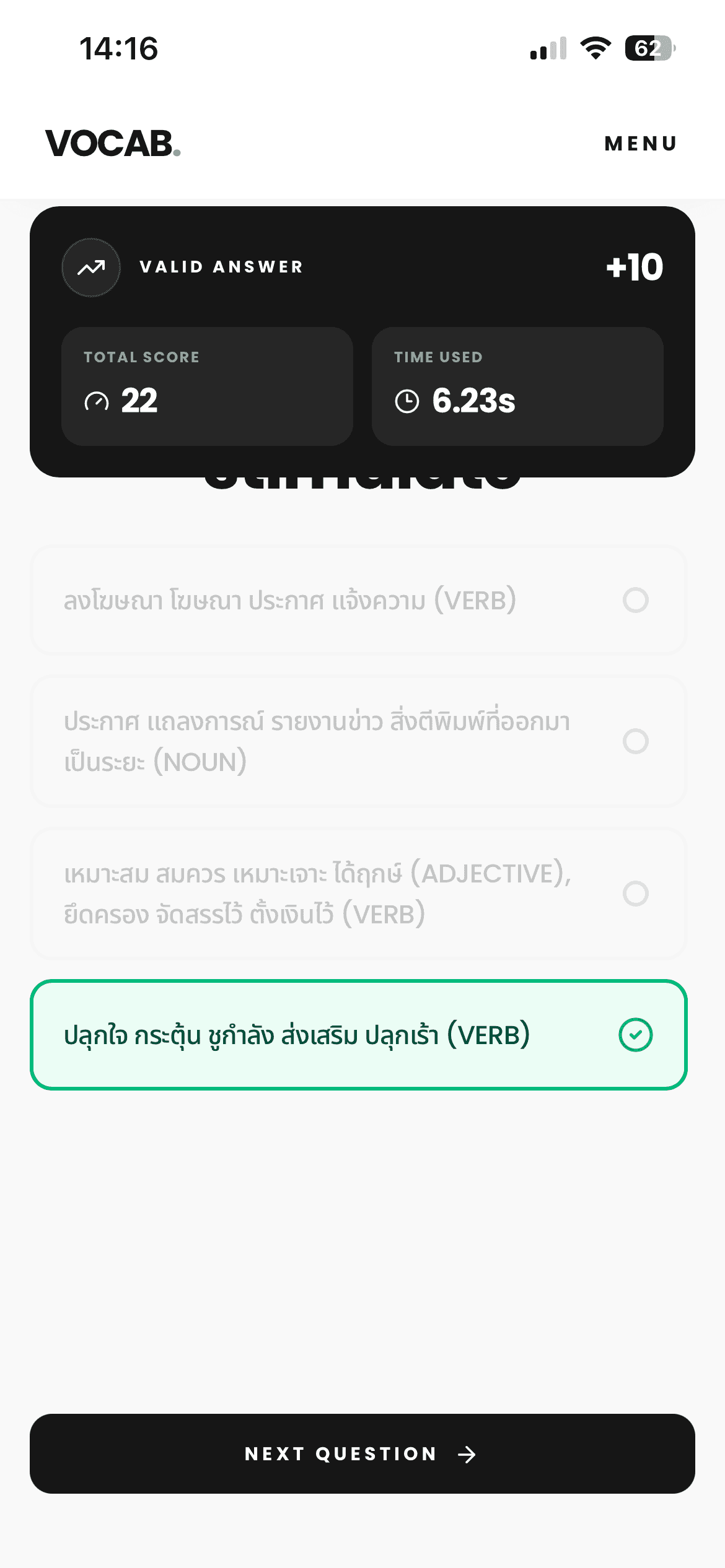
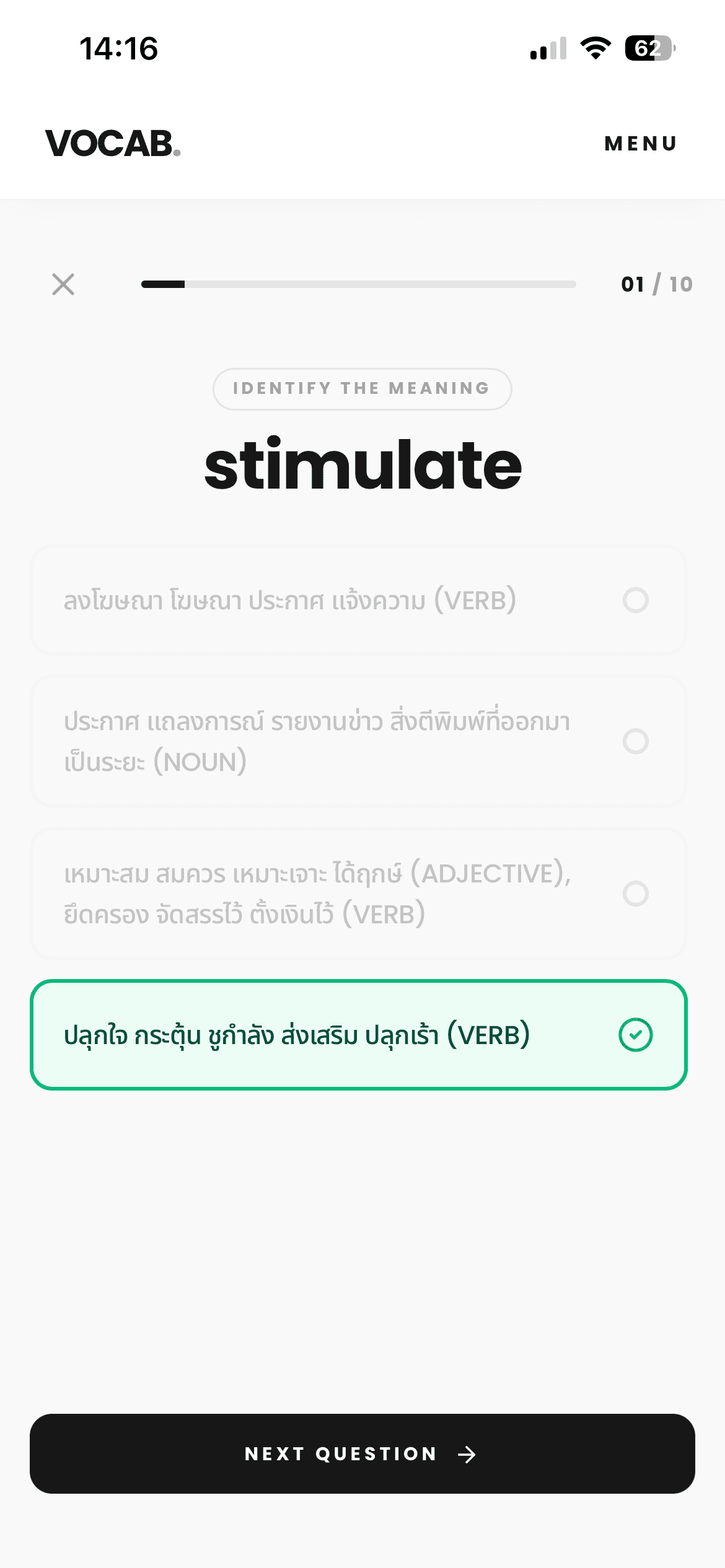
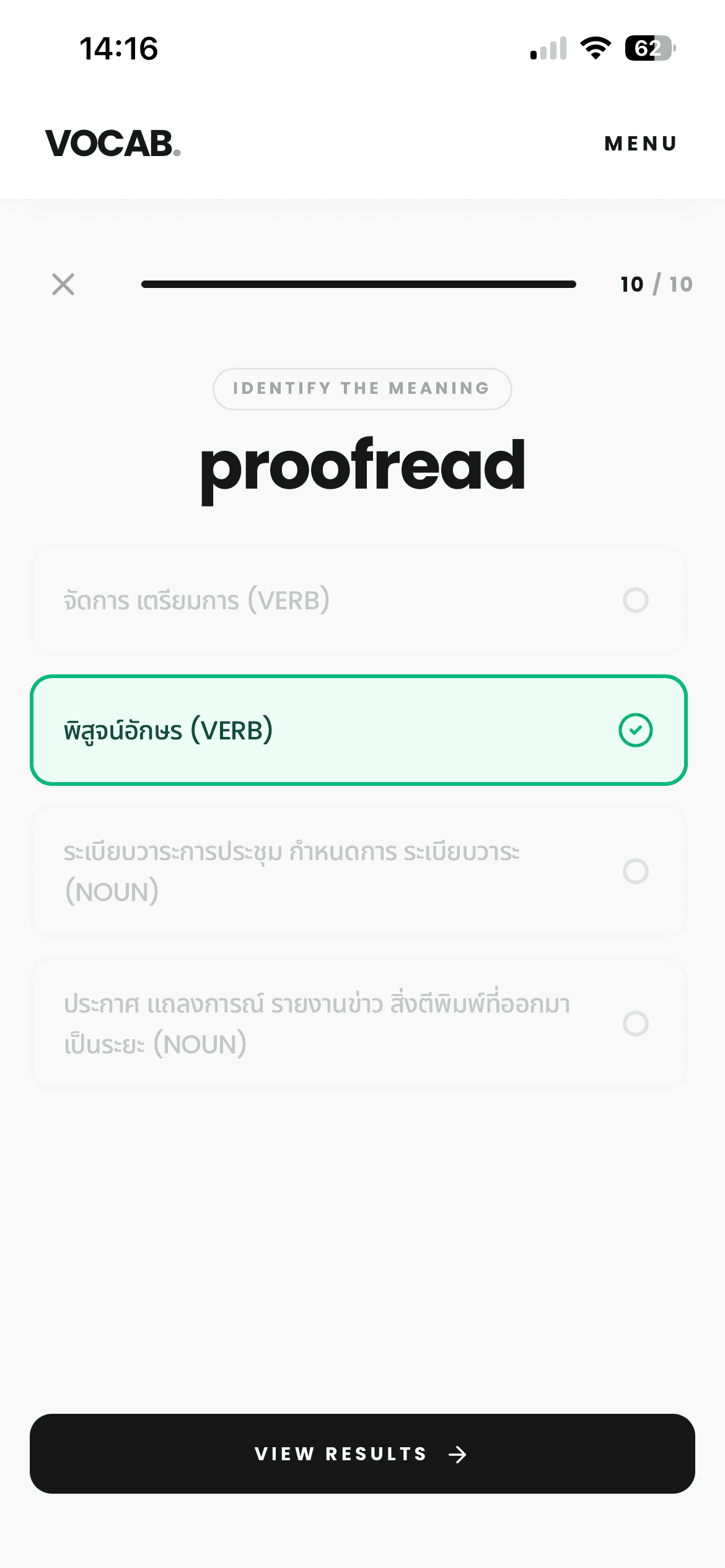
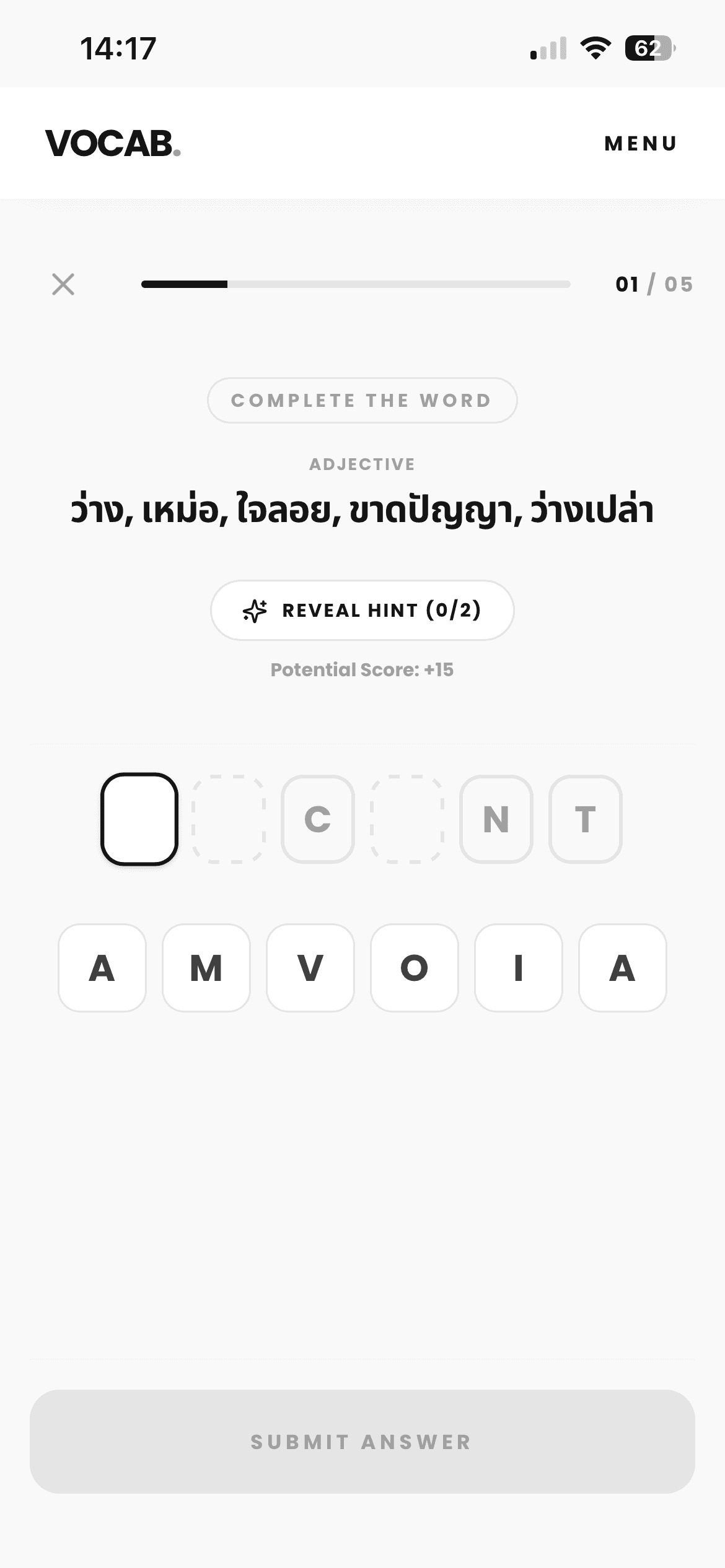
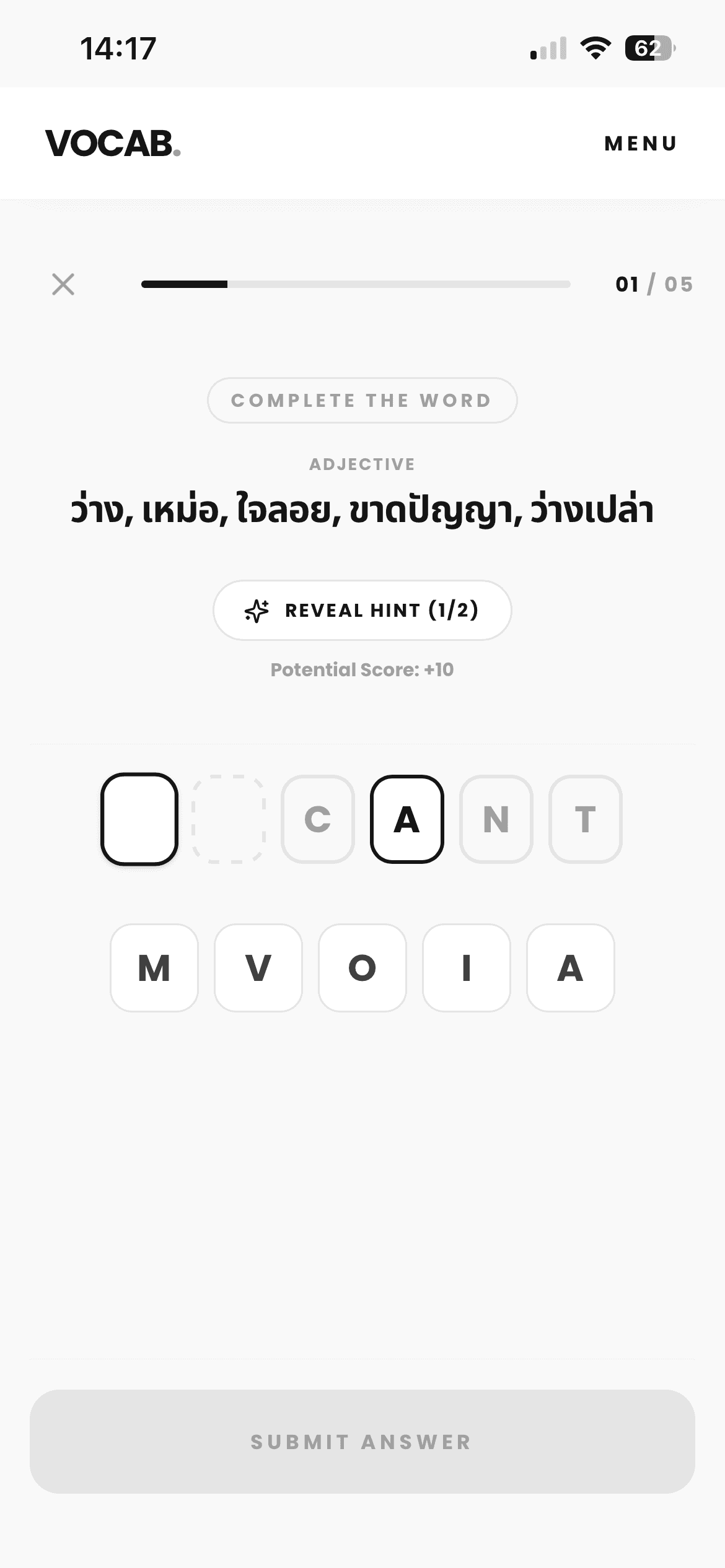
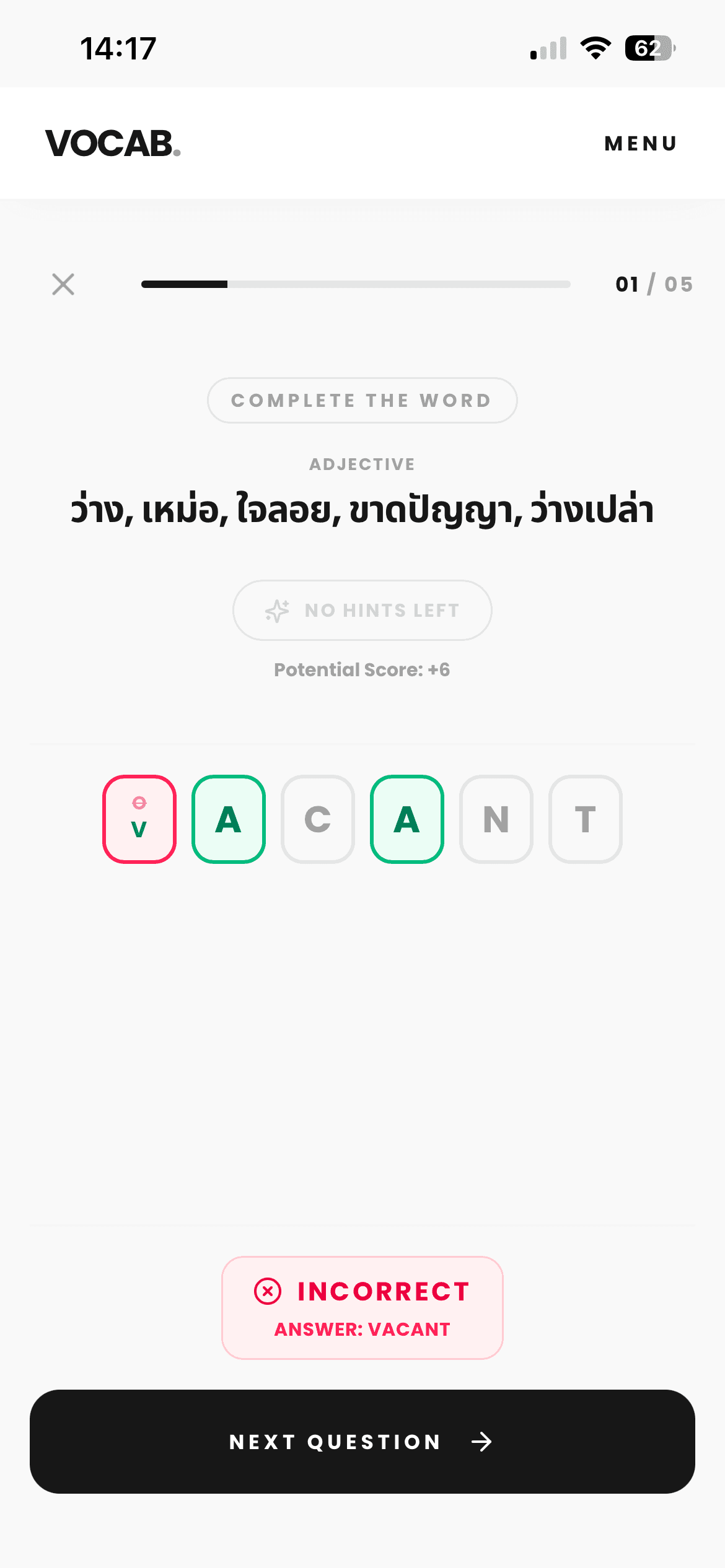
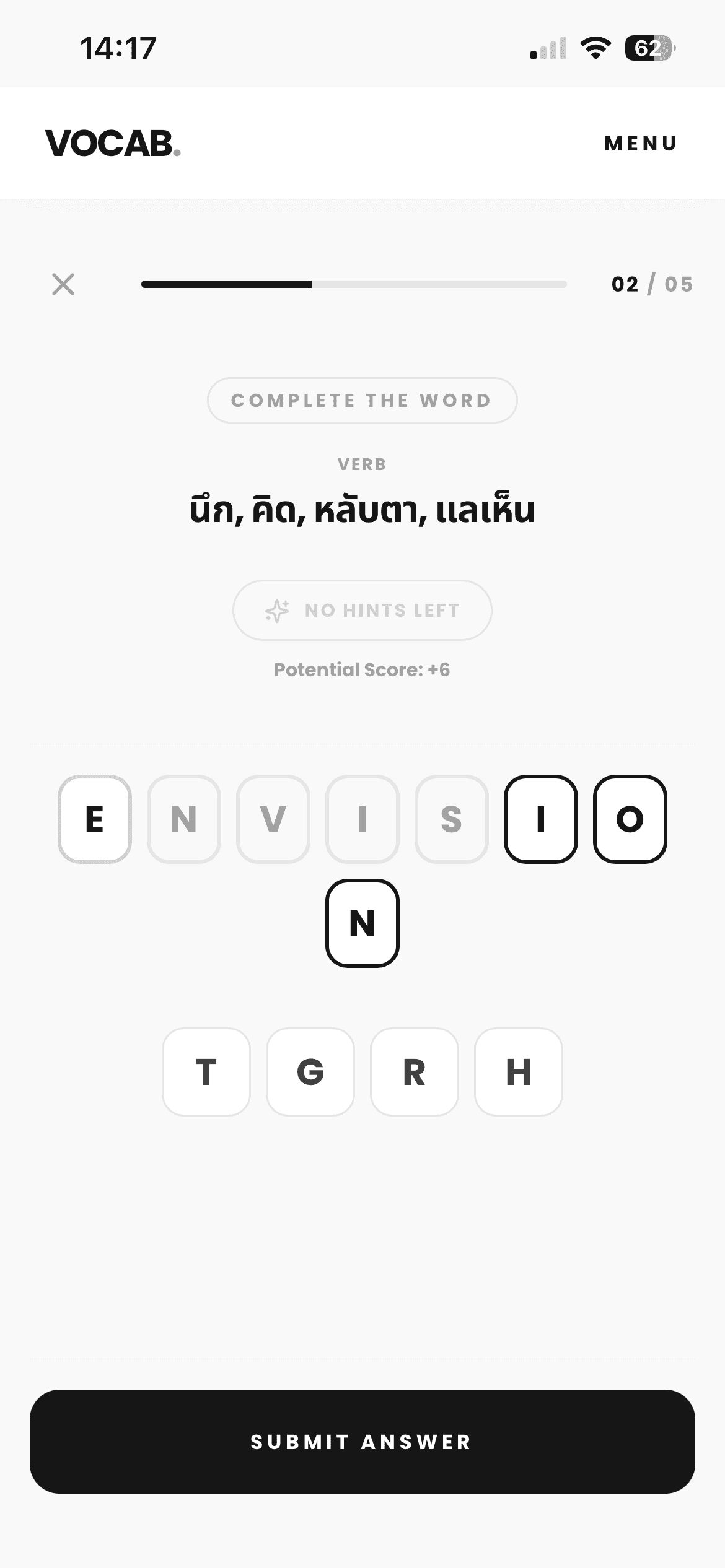
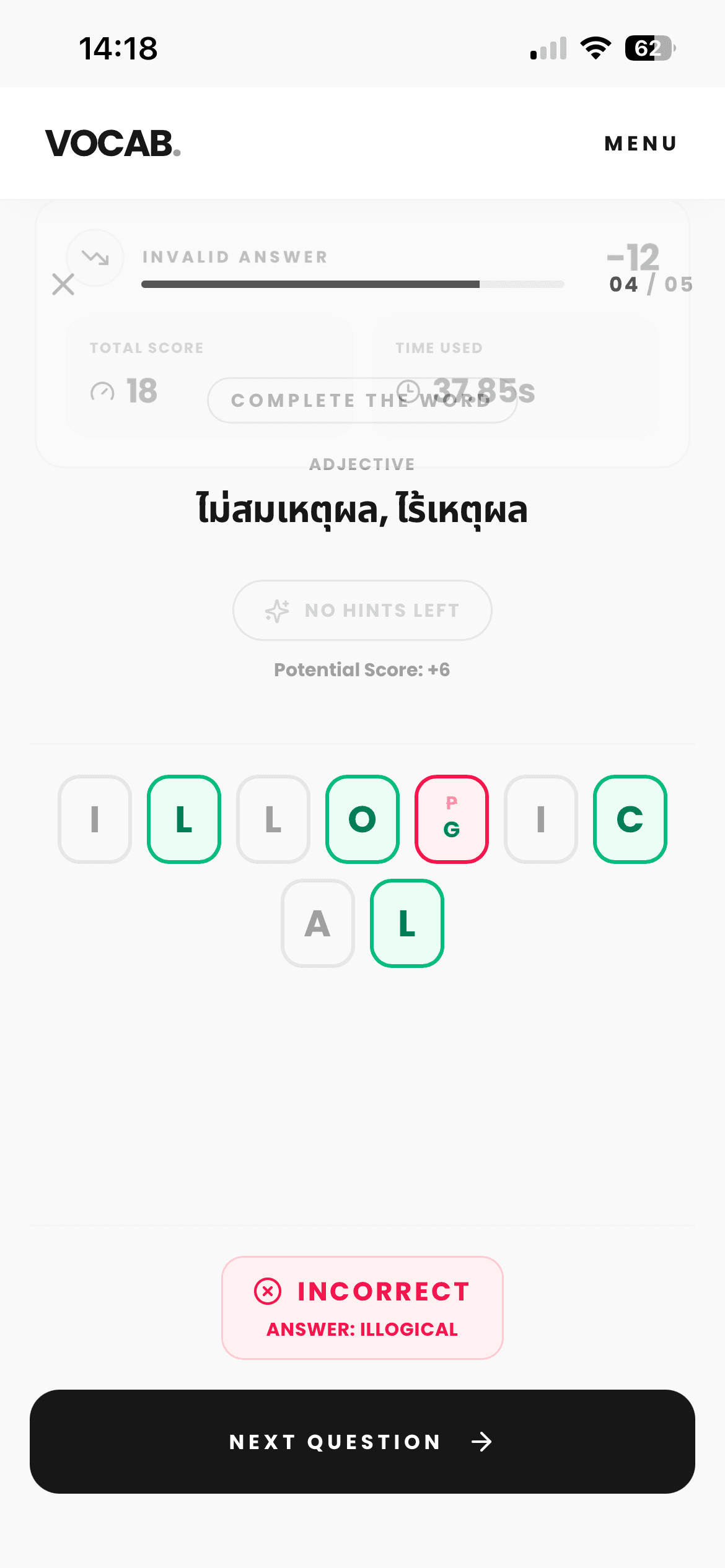
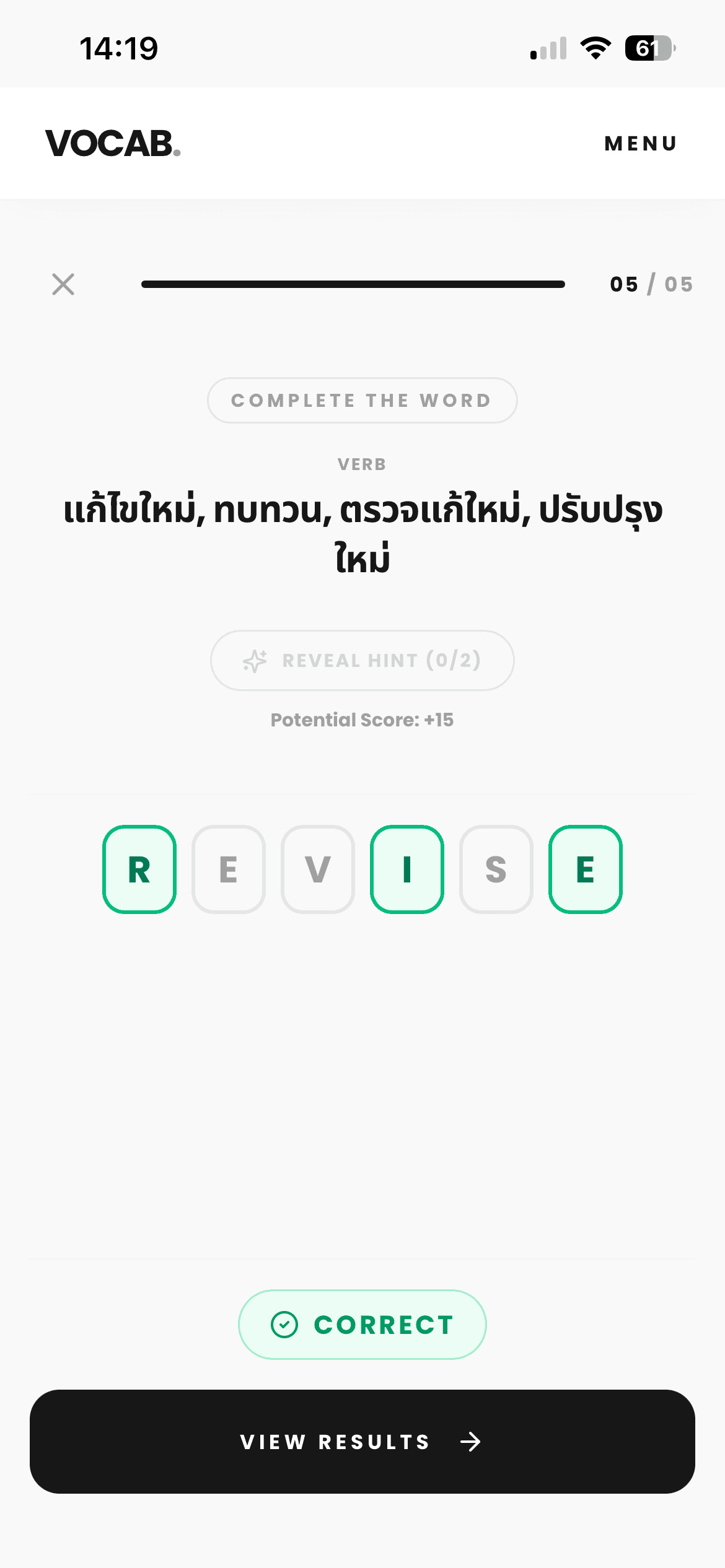
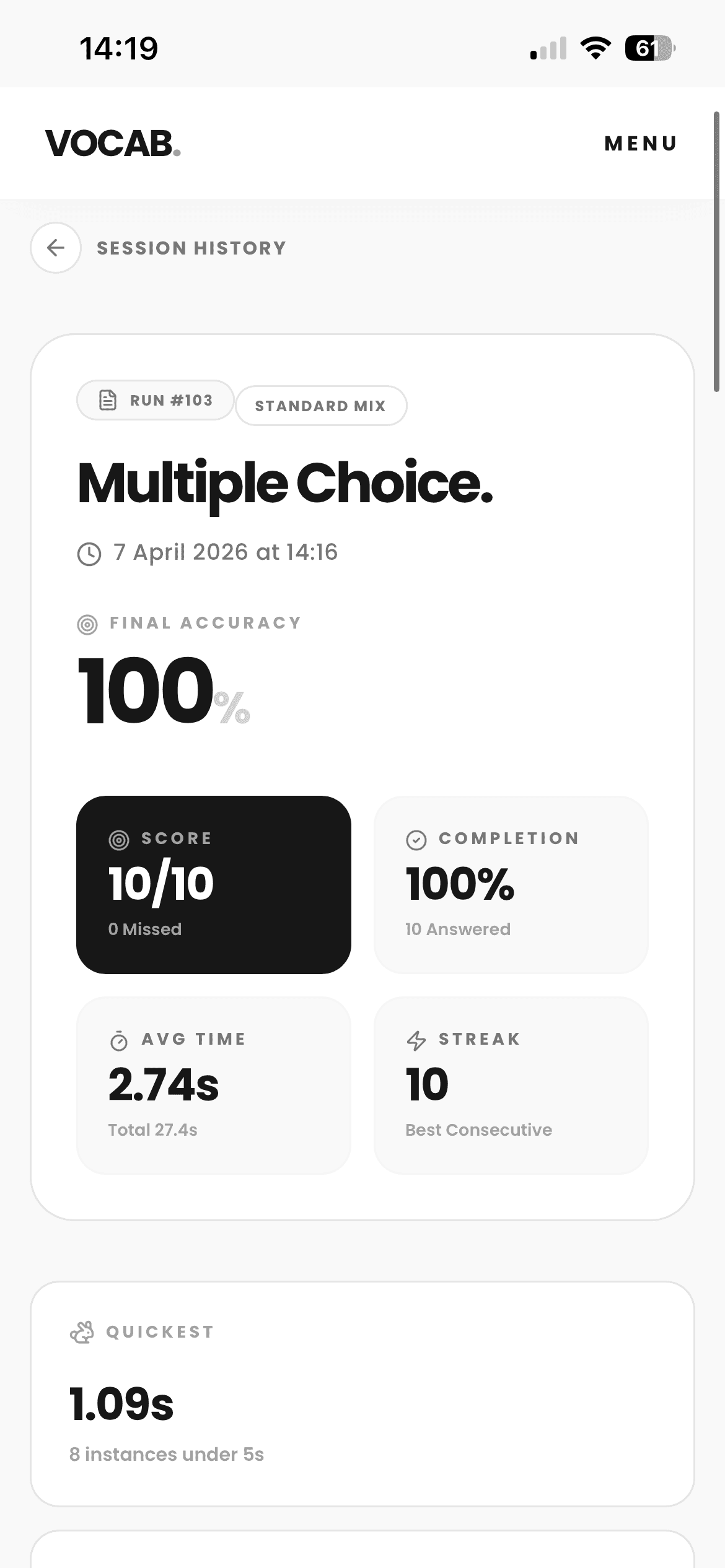
- 03Built an advanced quiz system that allows users to configure the content scope and number of questions, includes a wrong-answer review mode, and uses weighted randomization to surface low-scoring words more frequently than already-mastered words, with both multiple-choice and fill-in-the-blank question formats.
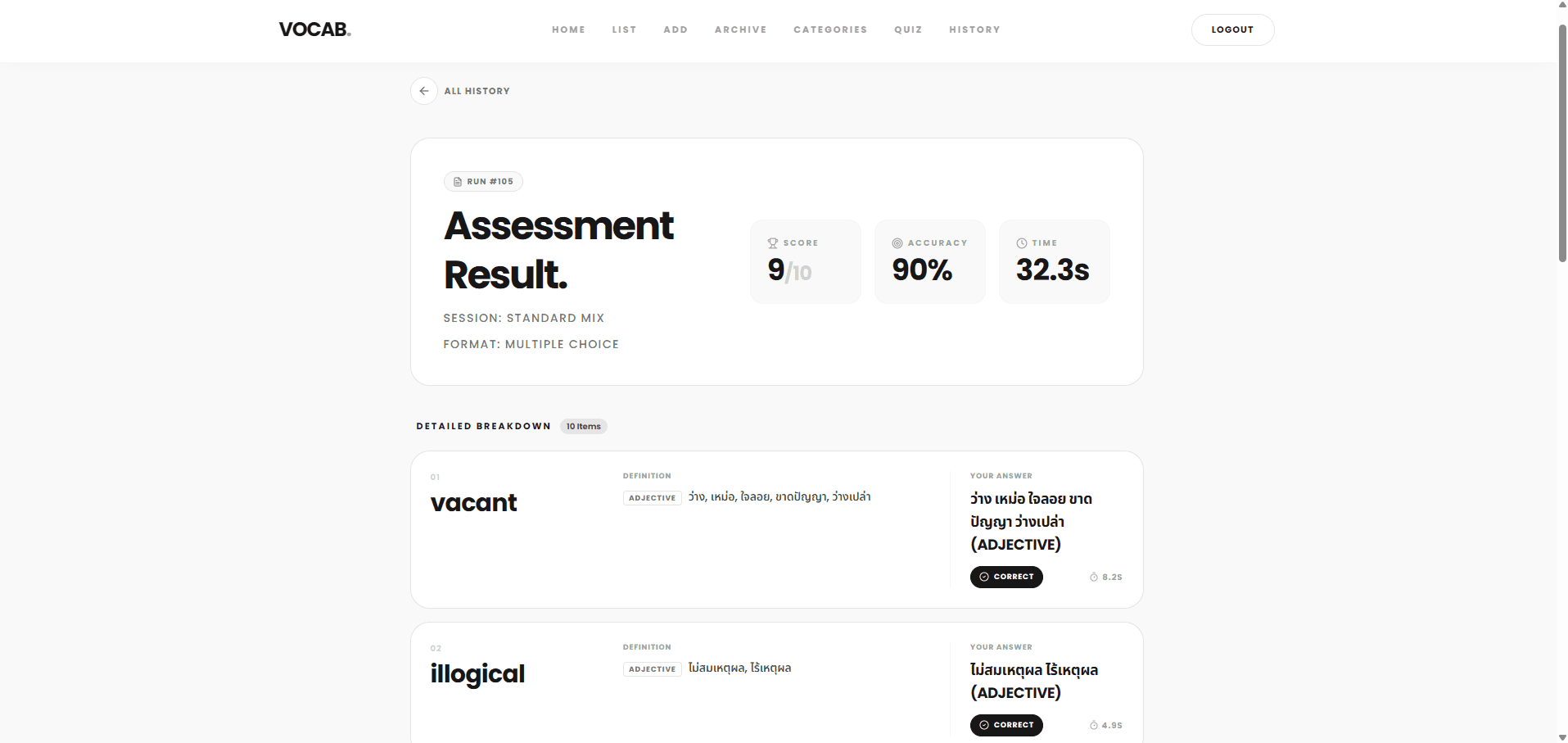
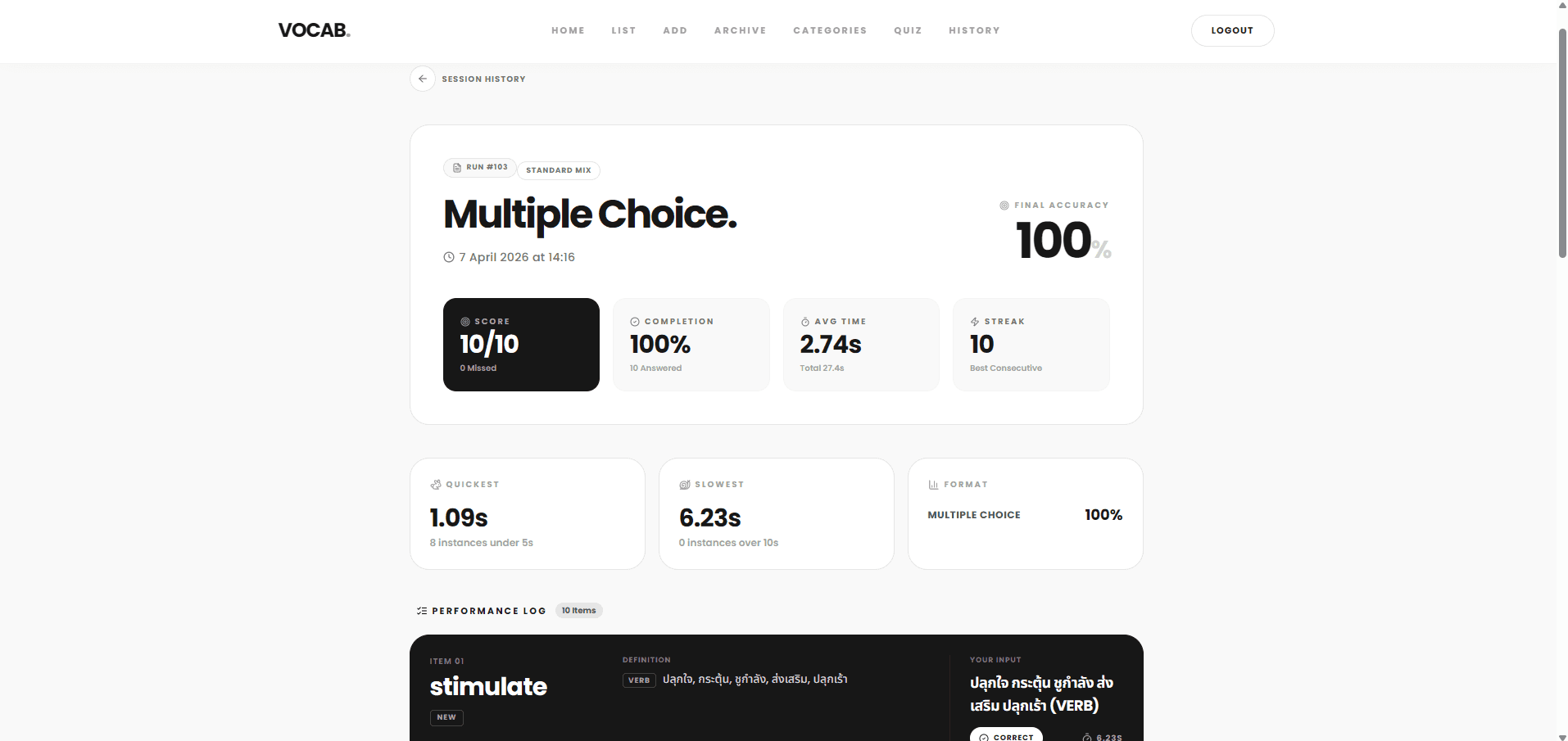
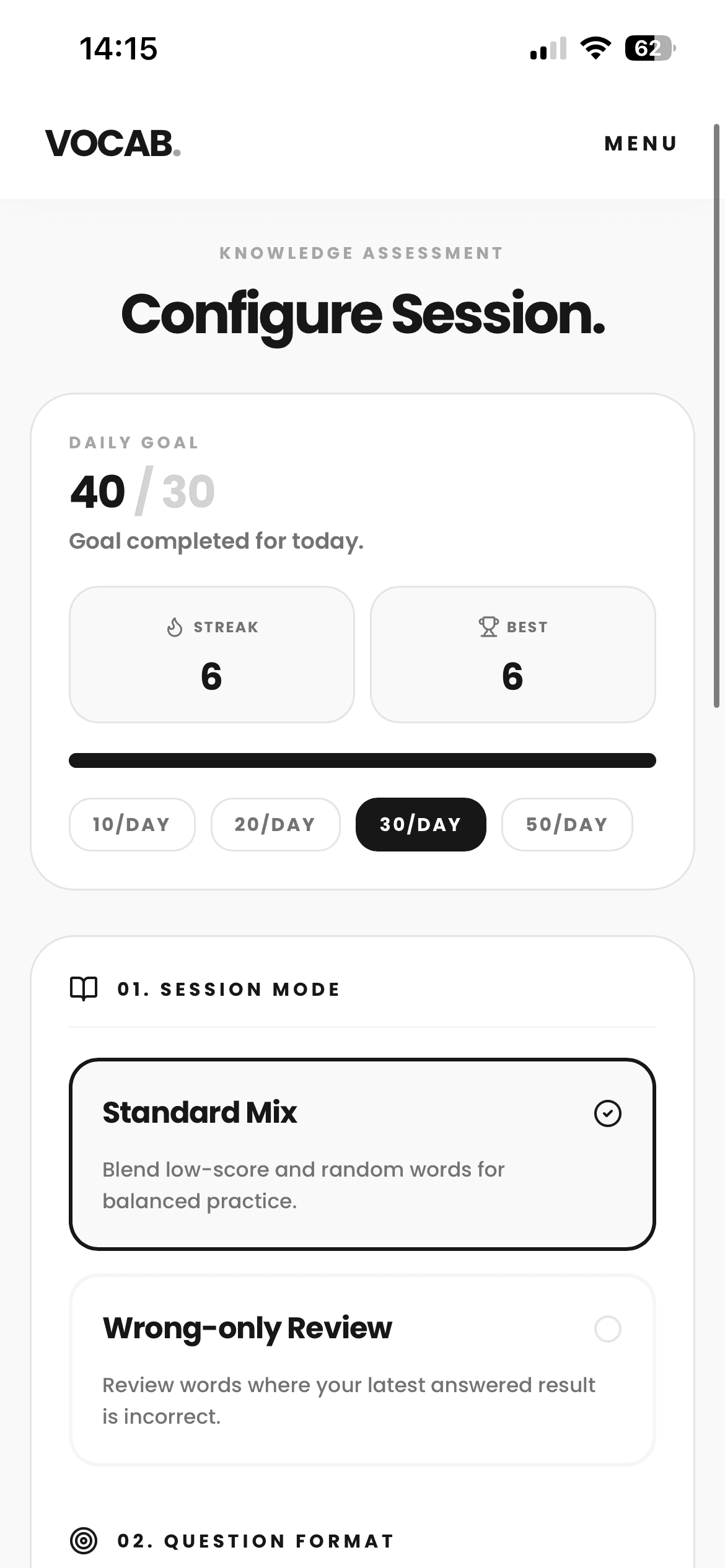
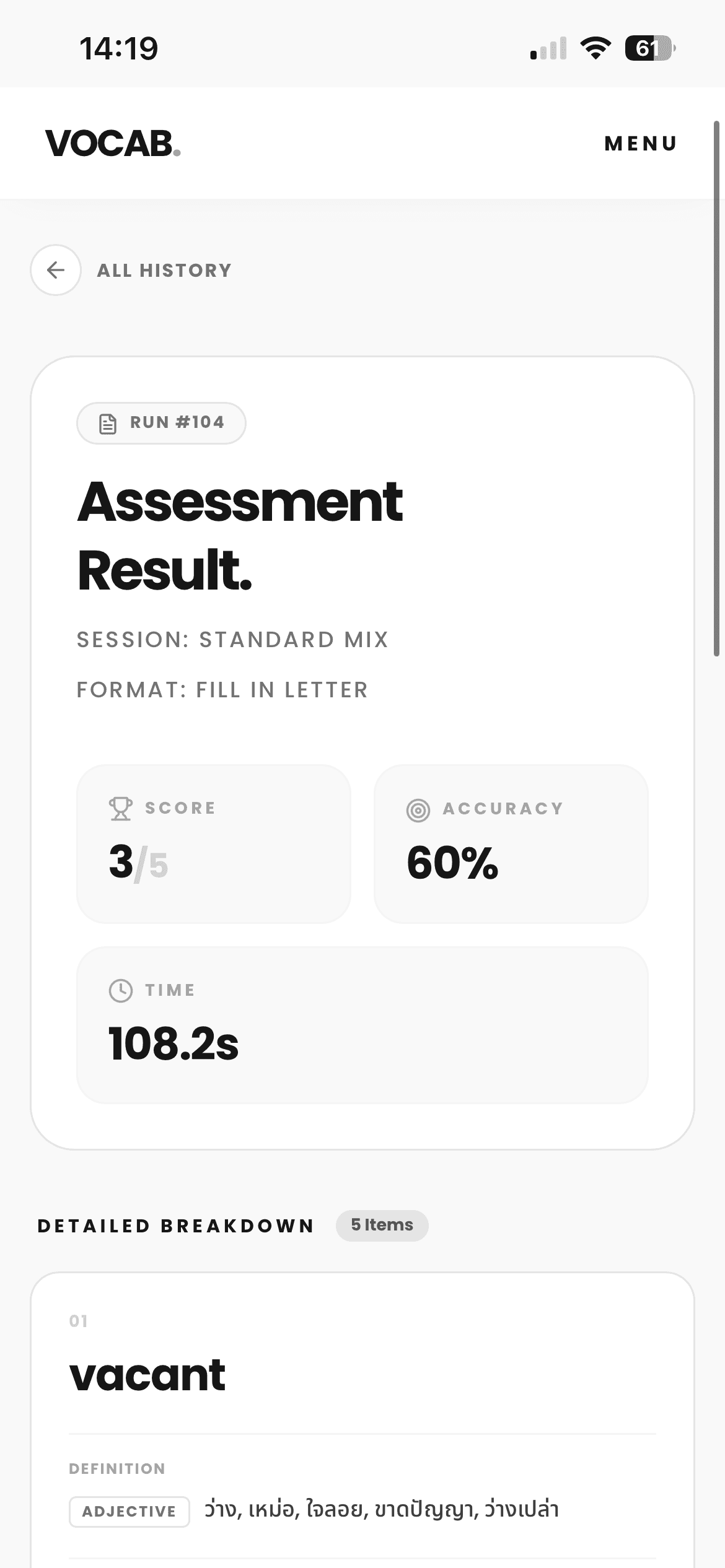
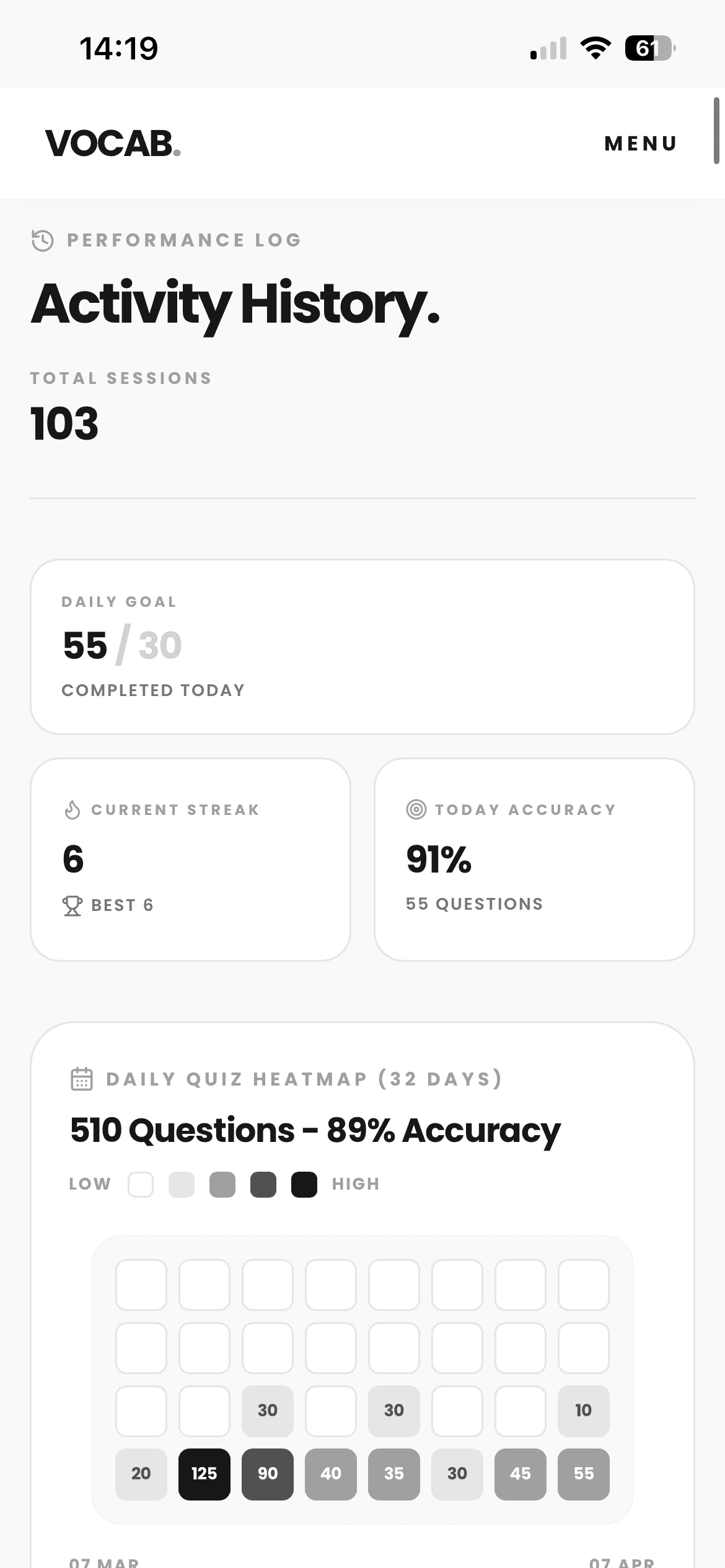
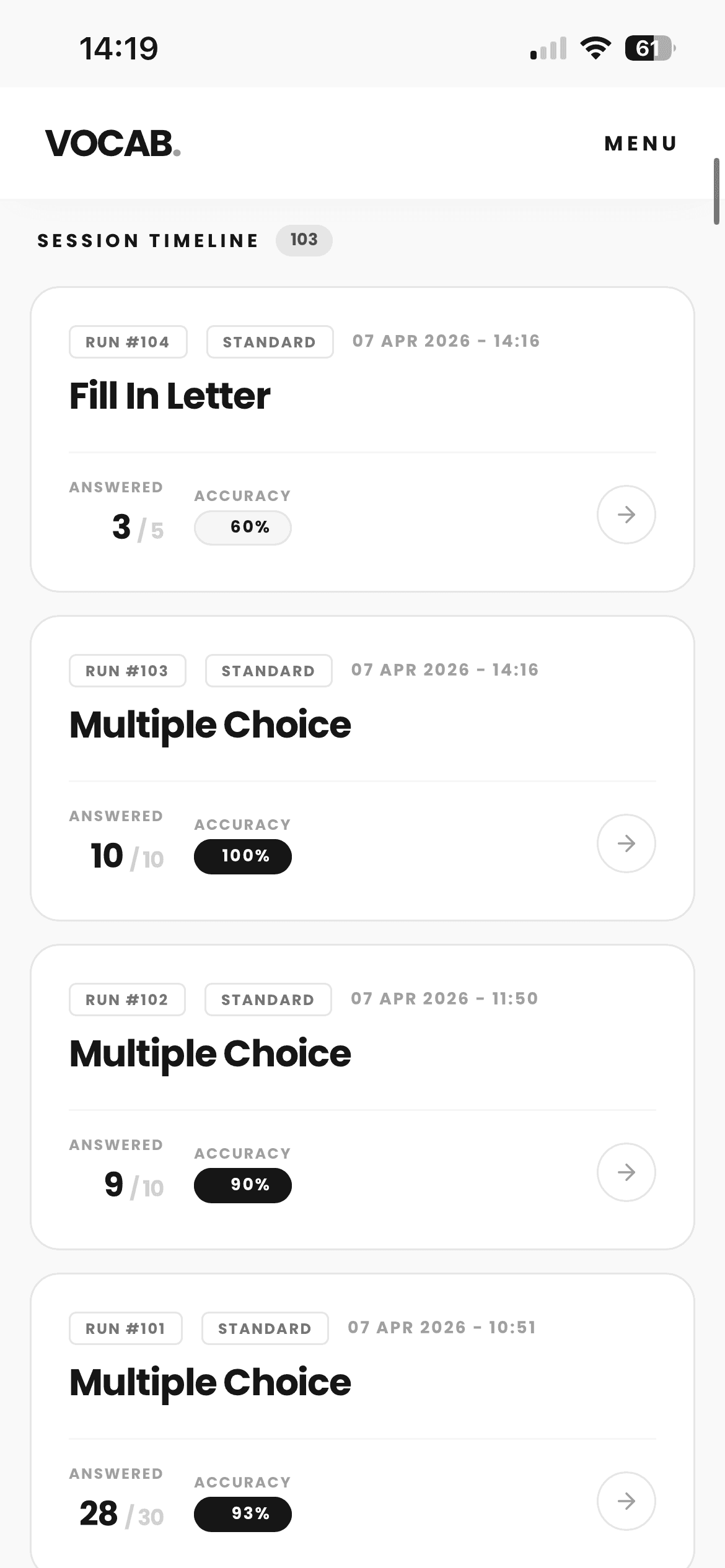
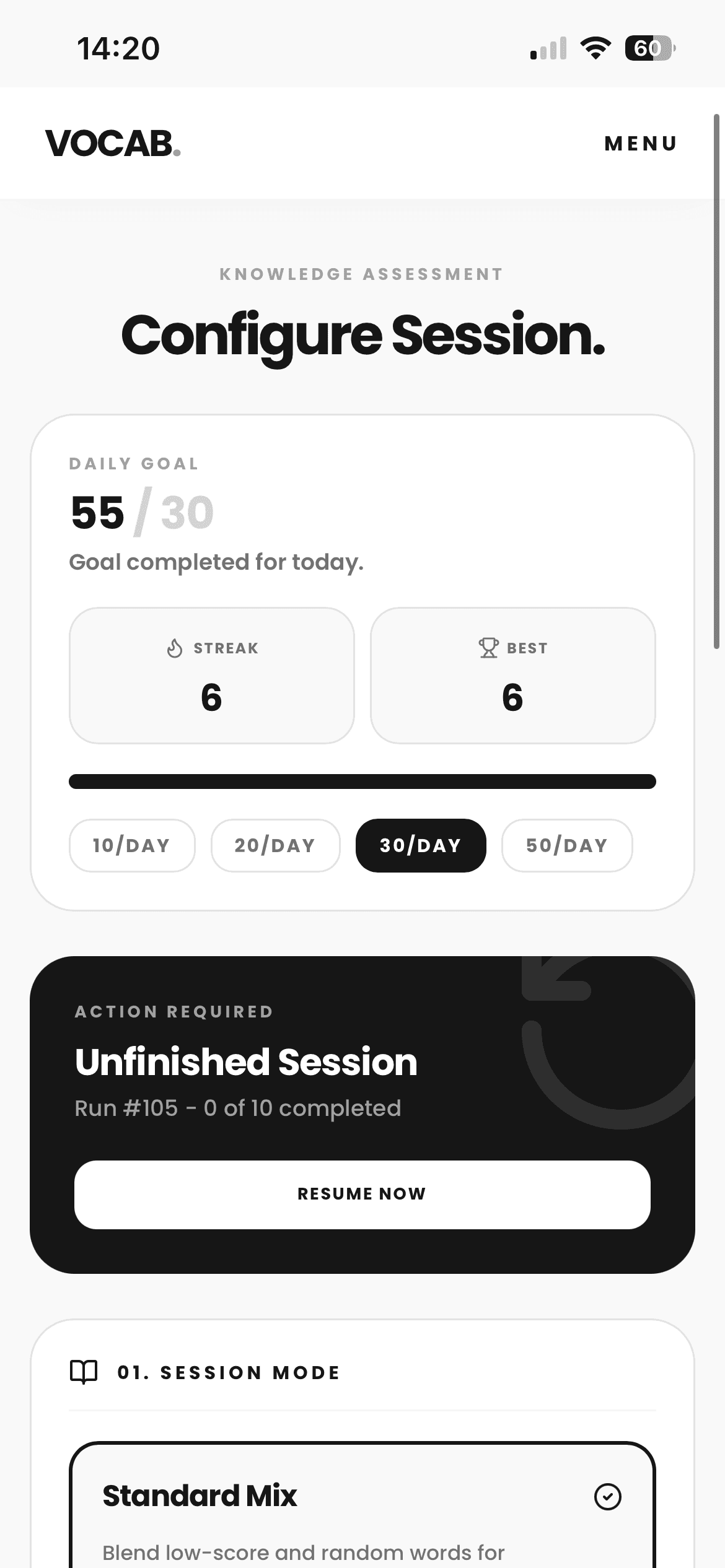
- 04Added a Daily Goal system for setting daily targets and an Activity History feature for reviewing quiz activity and tracking vocabulary learning progress over time.
The result
- 01Created a vocabulary learning tool that truly matches my personal learning style and allows complex vocabulary structures to be recorded in an organized way.
- 02Vocabulary retention improved significantly thanks to a quiz system that emphasizes weak words, reducing time spent reviewing words that were already remembered.
- 03The daily goal and activity history systems help build consistent learning habits and provide a concrete overview of personal progress over time.
Gallery
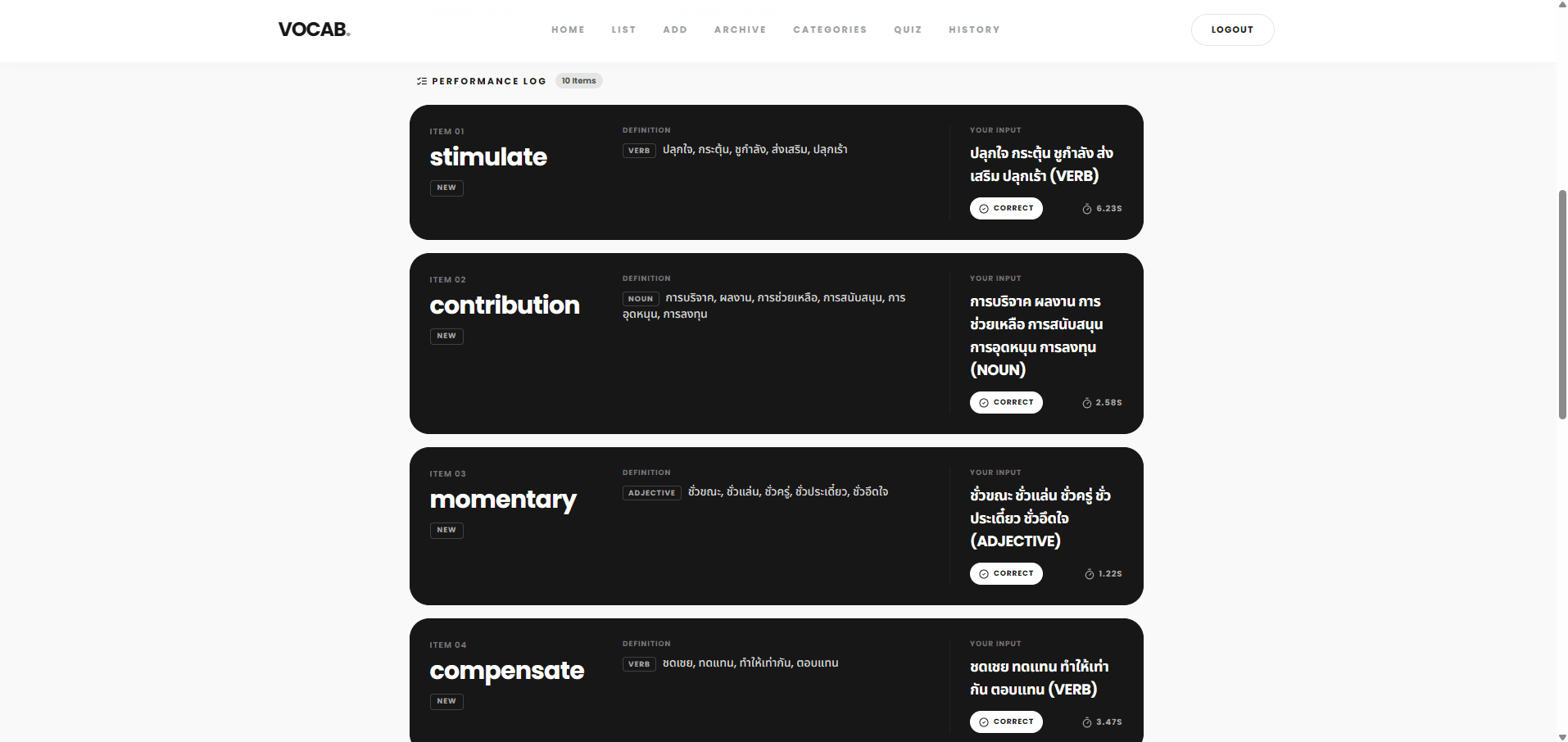
PC - User interface
16:9 / MD








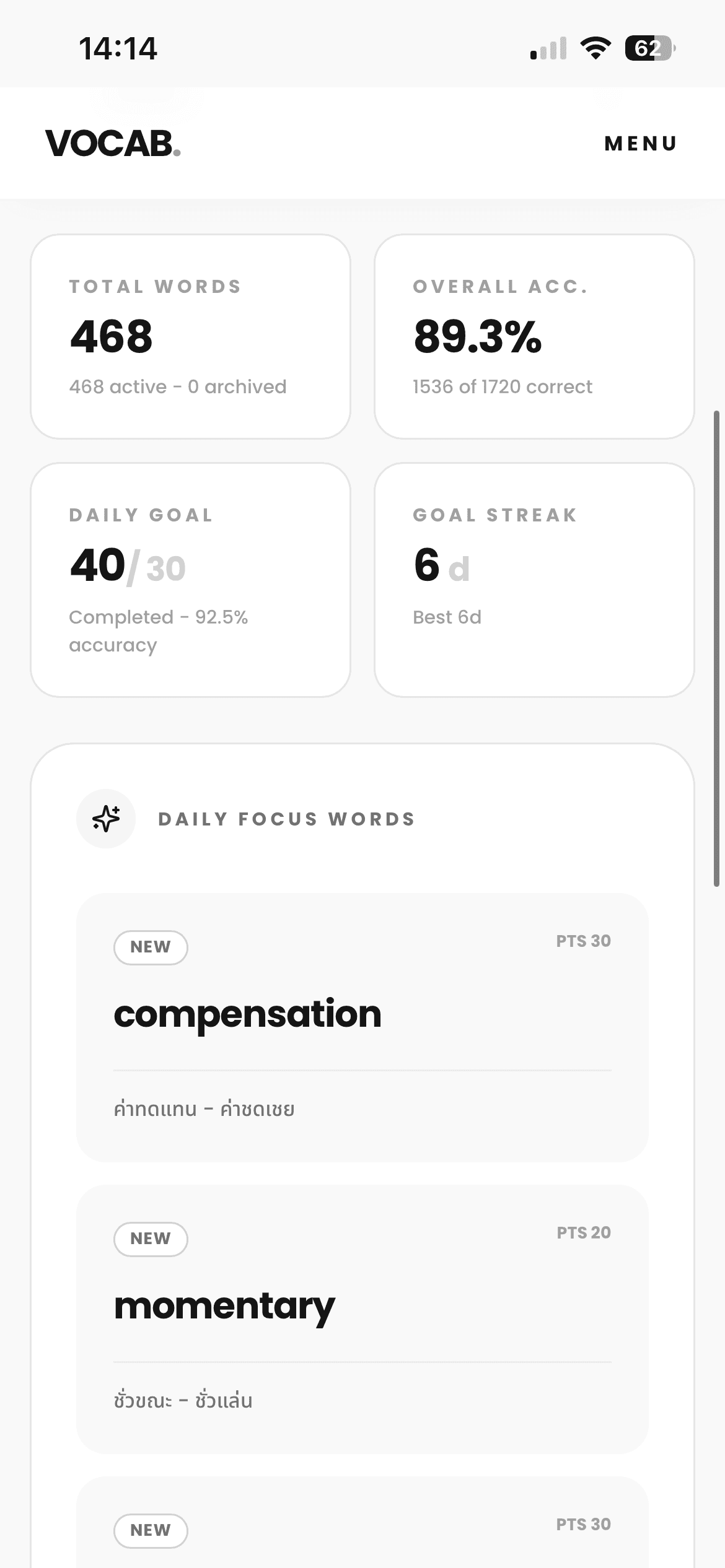
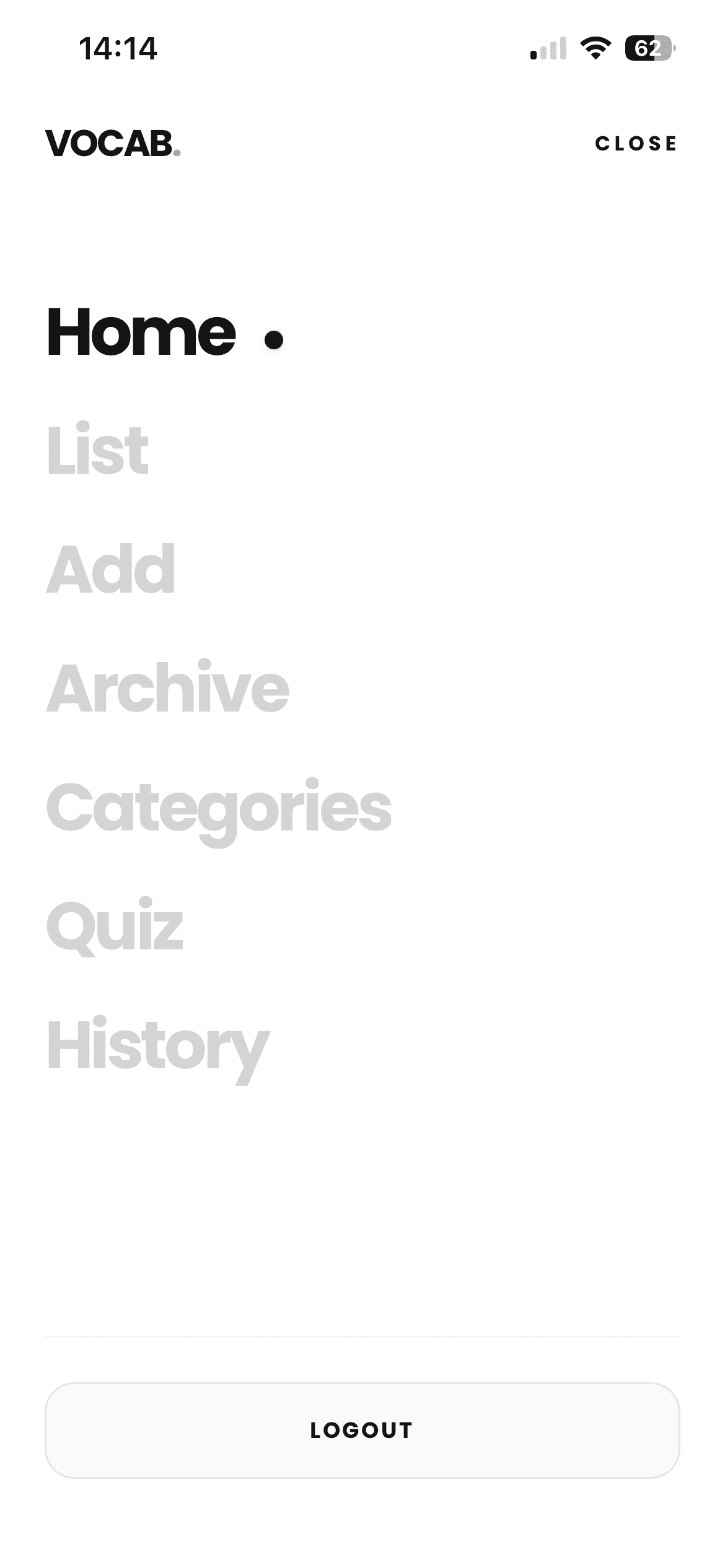
Mobile - User interface
9:16 / SM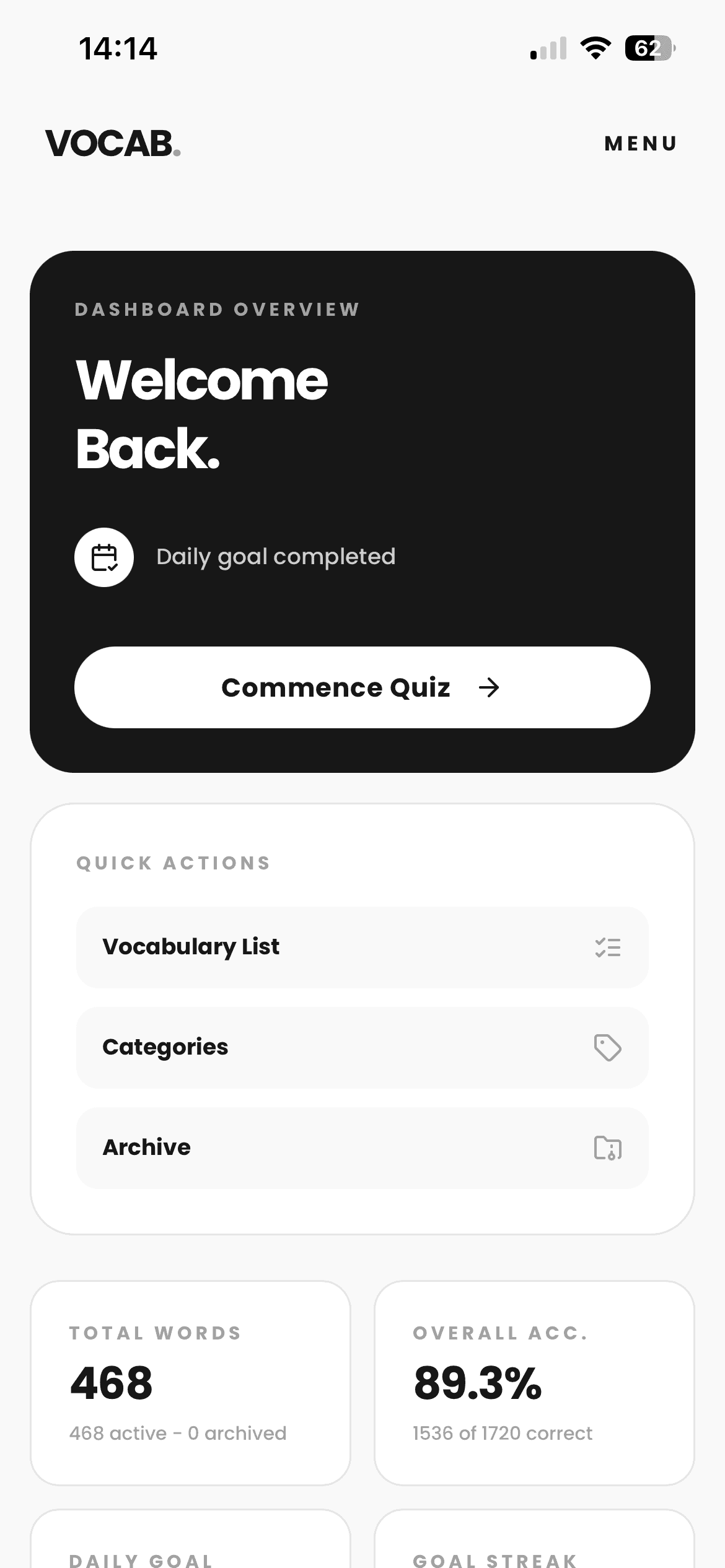











Retrospective
Challenges
- Designing a highly flexible database schema to support words with multiple meanings, multiple parts of speech, category relationships, and per-word quiz history records.
- Writing the quiz algorithm, especially the weighted random selection logic, to balance frequently missed words with generally random vocabulary so that quizzes remain appropriately challenging.
- Designing scoring logic that accurately reflects real learning progress, allowing vocabulary status to be adjusted up or down correctly, such as dropping a word from MASTERED back to REVIEWING after an incorrect answer.
- Managing frontend state for complex quiz modes, such as switching between multiple-choice and fill-in-the-blank formats, and summarizing the final overall score at the end.
Learnings
- Learned how to apply concepts similar to a Spaced Repetition System (SRS) to design the weighting and scoring algorithm for vocabulary learning.
- Improved my understanding of complex relational database design for dictionary and education technology applications.
- Learned how to design a quiz interface with fast responsiveness, engaging usability, and clear result summaries.
- Gained experience in building basic gamification systems, such as Daily Goals and Activity Logs, to increase engagement and encourage continued app usage.
Interested in work like this?
Tell me about your brief — I reply within 24 hours.